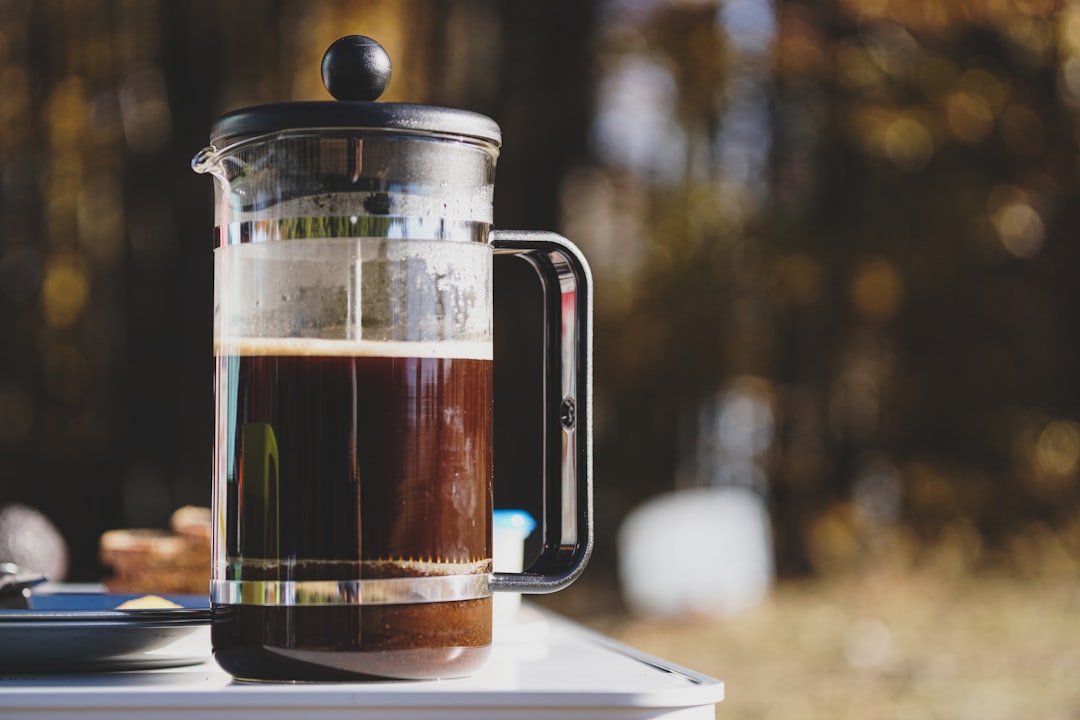
TL;DR
- French press uses full immersion brewing for rich, full-bodied coffee without paper filters or special equipment.
- Choose 3-cup, 8-cup, or 12-cup size based on your daily serving needs; borosilicate glass or stainless steel both work.
- Medium-coarse grind, 4 minutes steep time, and gentle pressing gives beginners consistent, excellent results.
French Press Routine: Step-by-Step for Beginners
If you want a genuinely great cup of coffee at home without spending hours learning technique, the French press is your best friend. No paper filters to buy. No complicated pressure gauges. No steep learning curve. Just good coffee, hot water, and a few minutes of your time.
This guide walks you through everything you need to know to brew a consistently excellent French press — from choosing the right setup to pressing without turning your cup into a murky mess.
Why French Press Is Perfect for Home Brewing
The French press works through full immersion brewing — your coffee grounds sit directly in hot water the entire time, extracting oils and flavors that paper filters would normally trap and throw away. The result is a rich, full-bodied cup with real depth to it.
It’s also forgiving in the best possible way. You don’t need precise pour angles or specialized equipment. The process is straightforward enough that you can nail it on your first try and keep refining from there.
If you’re newer to home brewing, French press is a natural starting point. Once you understand immersion brewing, concepts like brew time and grind size start to click — and that makes the jump to pour-over or espresso much smoother later on.
Choosing the Right French Press Size and Material
Before you brew a single cup, it helps to pick a French press that fits how you actually drink coffee.
Capacity: French presses typically come in three sizes:
– 3-cup (12 oz): Ideal if you’re brewing just for yourself
– 8-cup (34 oz): A versatile size for one to two people, or if you drink multiple cups
– 12-cup (51 oz): Best for households or entertaining guests
Here’s a small gotcha — “cups” on most French press labels refers to 4 oz servings, not standard mugs. An 8-cup press actually makes about two large mug servings. Keep that in mind when choosing.
Material: The two most common materials are borosilicate glass and stainless steel.
Borosilicate glass is the classic choice. It looks great, doesn’t affect flavor, and lets you watch the brew as it happens. The downside is that it’s fragile — a knock on the counter edge or a cold water splash into a hot pot can crack it.
Stainless steel is much more durable and typically better at holding heat, especially double-walled versions. If you’re accident-prone in the kitchen or tend to brew and then walk away, stainless is worth considering. The trade-off is that you can’t see inside, and some budget stainless presses have a slight metallic effect on flavor (though quality ones don’t).
Single-wall vs. double-wall: Single-wall glass looks clean and classic but loses heat quickly. Double-wall construction — whether glass or steel — acts like a mini thermos, keeping your coffee hot longer without scalding your hands. Worth the slight price premium if you’re a slow-morning sipper.
Selecting and Grinding Your Coffee Beans
The French press rewards good beans. Because nothing filters out the oils, whatever character your coffee has comes through clearly in the cup. That’s a feature, not a bug — as long as you choose beans that work well with this method.
Roast level: Medium to dark roasts tend to shine in a French press. They bring out chocolate, caramel, and nutty notes that pair beautifully with the full-bodied texture of immersion brewing. Light roasts can work, but they sometimes taste thin or sour in a French press because the method extracts differently than pour-over does. If you love light roasts, you can still use them — just grind slightly finer and extend the steep time by 30 seconds.
Grind size: This is one of the most important variables you control, and it’s where beginners most often stumble. For French press, you want a coarse grind — think the texture of raw breadcrumbs or rough sea salt. Coarse grounds extract more slowly, which is exactly what you need for a 4-minute immersion brew.
Grind too fine and you’ll end up with over-extracted, bitter coffee and a gritty mouthfeel from particles slipping through the mesh filter.
Grinder choice: A burr grinder gives you consistent, uniform particle size, which means even extraction throughout your brew. A blade grinder chops coffee randomly — you end up with a mix of fine powder and large chunks that extract at completely different rates. If you can make one equipment upgrade to improve your French press coffee, a burr grinder is it. burr coffee grinder for home use
Water Temperature and Timing: The Brewing Foundation
Water temperature and brew time work together. Get either one off and your extraction suffers.
Temperature: The sweet spot for French press is 195–205°F (90–96°C). Water that’s too cool under-extracts, leaving your coffee weak and sour. Boiling water (212°F/100°C) over-extracts, turning the brew harsh and bitter.
If you don’t have a temperature-controlled kettle, the simplest approach is to bring water to a full boil, then let it sit off the heat for 30 seconds. That naturally brings it down into the right range.
Brew time: Four minutes is the standard for French press, and it’s a reliable baseline for most coarsely ground beans. At four minutes, you get full immersion extraction — balanced flavor without the harsh over-steeped taste that comes from leaving it longer.
You can experiment from there. A slightly longer steep (4:30) can round out lighter roasts. A shorter steep (3:30) can work if your grind ran slightly finer than ideal. But 4 minutes is your anchor point.
Step-by-Step Brewing Process
Here’s the complete routine from start to finish.
What you’ll need:
– French press
– Coarsely ground coffee (about 1:15 ratio — 1g coffee per 15g water, or roughly 2 tablespoons per 6 oz water)
– Hot water (195–205°F)
– Timer
– Stirring spoon (wooden or plastic to avoid scratching glass)
Step 1: Preheat your French press
Pour a small amount of hot water into the empty press, swirl it around, and dump it out. This preheats the glass or steel so your brew doesn’t lose temperature the moment you add your grounds. Takes 10 seconds and makes a difference.
Step 2: Add your grounds
Add your coarsely ground coffee to the empty pot. Give it a gentle shake to level the bed.
Step 3: Bloom
Pour just enough hot water to wet all the grounds — about twice the weight of your coffee. So if you’re using 30g of coffee, pour about 60g of water. Start your timer. Let it sit for 30 seconds.
This is the bloom phase. Fresh coffee releases carbon dioxide when it hits hot water, and letting it outgas first means better, more even extraction during the full steep.
Step 4: Pour and stir
After 30 seconds, slowly pour in the remaining water to your desired level. Give it a gentle stir to make sure all the grounds are evenly saturated. Place the lid on top — plunger up, not pressed down.
Step 5: Wait 4 minutes
Set your timer for 4 minutes and step away. Let the immersion do its work.
Step 6: Press slowly
When the timer goes off, press the plunger down slowly and steadily. Aim for 20–30 seconds from top to bottom. You should feel gentle, even resistance. If it plunges with zero resistance, your grind was too coarse. If it’s extremely hard to press, it was too fine.
Step 7: Pour immediately
Don’t let brewed coffee sit in the pot. The grounds are still sitting at the bottom, and the hot liquid continues to extract from them even after pressing. Pour into your mug (or a separate carafe if you’re brewing for multiple people) right away.
Leave the last bit of liquid in the pot — that final sludge at the bottom is mostly sediment you don’t want in your cup anyway.
Common Beginner Mistakes and How to Avoid Them
Even with a simple method like French press, a few habits can quietly ruin your cup. Here’s what to watch for:
Grinding too fine
This is the most common mistake. Fine grounds over-extract and slip through the mesh filter. The result: bitter, muddy coffee with a gritty texture at the bottom of your mug. When in doubt, go coarser than you think you need to.
Pressing too fast
Slamming the plunger down forces fine particles and sediment up through the filter and into your coffee. A slow, controlled press (20–30 seconds) keeps your cup clean and avoids an unwanted bitterness spike.
Leaving coffee in the pot
This is a sneaky one. Your press looks clean on the counter, so you walk away and come back 10 minutes later to pour a second cup. By then, the coffee has been steeping on the grounds the entire time and tastes flat and harsh. Pour everything immediately, or pre-pour into a thermos.
Using freshly boiled water without waiting
Pouring boiling water straight into your French press is a fast route to a bitter, scorched-tasting brew. The 30-second wait off the heat is small but important.
Cleaning and Maintenance for Long-Lasting Brews
A clean French press makes better coffee and lasts longer. Coffee oils are flavor-active — old residue left in your press taints every cup you make on top of it.
After every brew:
Disassemble the plunger fully — unscrew the filter assembly so you have separate pieces: the rod, the cross plate, the mesh filter, and the spiral plate. Rinse everything under warm water. Don’t skip this because it looks clean enough — invisible oil buildup happens fast.
Weekly deep clean:
Wash all components with hot, soapy water and a soft brush. Pay special attention to the mesh filter, which traps oils in tiny holes. Let everything air dry fully before reassembling — trapping moisture encourages mildew.
Filter replacement:
The metal mesh filter doesn’t last forever. With regular use, it develops small tears and warps slightly, letting more sediment through into your cup. If you notice your coffee getting progressively grittier despite a proper coarse grind, check your filter. Most mesh filters should be replaced every 1–2 years.
Your First French Press Cup Starts Here
The French press is one of those methods that rewards attention without demanding perfection. Get the grind coarse, the water temperature right, and the brew time consistent — and you’ll be making great coffee at home faster than you’d expect.
Once you’ve dialed in your routine, you’ll start noticing the difference between bean origins and roast levels in a way that a drip machine never quite reveals. That’s part of what makes this method such a satisfying place to start your home-barista journey.
Ready to take the next step? Check out our guide on choosing the right coffee beans for your brew method to get more out of every French press session.
Photo by Sorin Gheorghita on Unsplash