TL;DR
- Bottomless portafilters reveal extraction problems like channeling that spouted ones hide, giving you real diagnostic feedback.
- Expect messy first 20–50 shots as you dial in distribution and tamping technique; this isn't a gear problem, it's a learning signal.
- Switch when you've mastered basics on a spouted portafilter; premature upgrade frustrates more than it teaches.
Bottomless Portafilter: Is the Messy Learning Curve Actually Worth It?
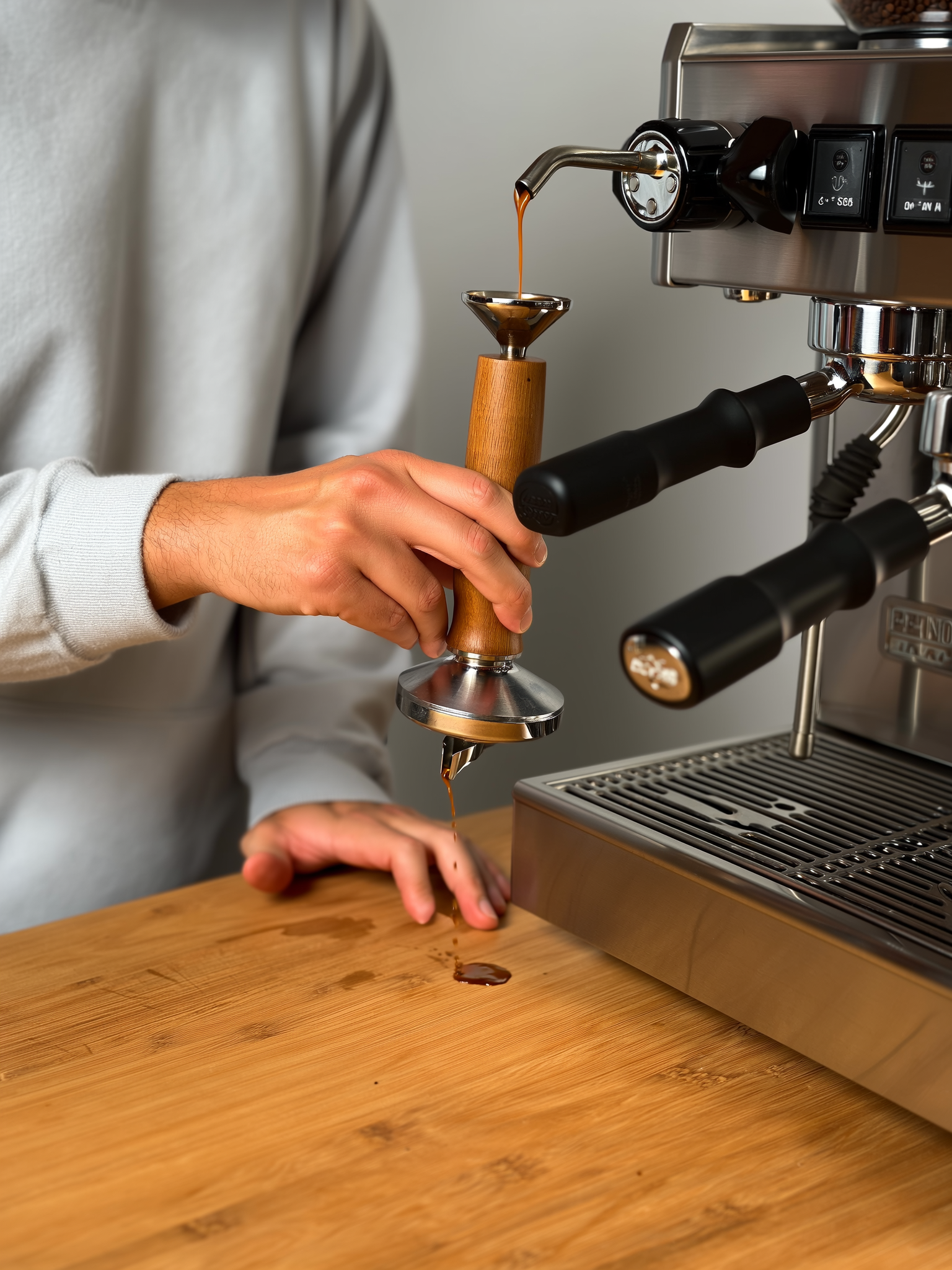
The bottomless portafilter — also called a naked portafilter — will spray espresso on your counter, your shirt, and possibly your ceiling. And according to experienced home baristas who’ve pulled thousands of shots with one, it’s still completely worth it.
That’s the honest answer upfront. But whether you’re ready for one right now depends on where you are in your espresso journey — and a lot of guides skip that part.
Here’s what actually happens when you switch, why the mess isn’t the portafilter’s fault, and exactly when to make the move.
What a Bottomless Portafilter Actually Does (and Why It Changes Everything)
A standard portafilter has a spout — sometimes one, sometimes two — that channels espresso into your cup through a fixed pathway. That pathway hides a lot. Channeling, uneven extraction, distribution problems: they all disappear quietly behind that spouted bottom, and you’re left guessing why your shot tastes flat or bitter.
A bottomless portafilter removes that spout entirely. The basket sits exposed, and espresso falls directly into the cup from the filter basket itself.
The result? You watch everything happen in real time:
– Where water first breaks through the puck
– Whether the flow is centered and even or shooting off to one side
– How crema forms and whether it’s consistent across the basket
– Exactly when channeling starts
This isn’t just aesthetically interesting (though it is genuinely mesmerizing to watch a good shot). It’s diagnostic information you simply cannot get from a spouted portafilter. The naked portafilter doesn’t create problems — it reveals the ones that were always there.
The Real Difference vs. a Standard Portafilter
Beyond visibility, there’s a practical extraction difference worth knowing about.
The spout and splitter pathway in a standard portafilter create restriction points that can affect flow dynamics and temperature stability. A bottomless portafilter eliminates those restriction points, which often results in cleaner espresso with better crema formation and more flavor clarity.
There’s also a hygiene angle. Coffee oils and loose grounds accumulate in standard spouts over time — that residue builds up in the splitter pathway and can affect flavor. A bottomless portafilter has nowhere for that buildup to hide, which means it’s naturally easier to keep clean between shots.
The trade-off is real though: you can’t split a shot between two cups without a separate spouted portafilter or a split-spout adapter. If you’re regularly pulling doubles for two people simultaneously, keep that in mind.
Expect This in Your First 20–50 Shots
No point softening this: the early sessions are genuinely messy.
Espresso spraying sideways is the most common beginner experience, and it’s not a sign you bought the wrong portafilter. It means your distribution or tamping isn’t even enough yet — which the spouted portafilter was silently forgiving. The naked one won’t forgive anything.
Specifically, here’s what causes the spray:
Uneven distribution. If grounds are heaped to one side of the basket before tamping, water takes the path of least resistance and channels through the thin side. You’ll see this immediately — the flow will shoot off-center rather than dripping cleanly from the middle of the basket.
Inconsistent tamp pressure or angle. A tamp that’s even slightly tilted creates a denser wall on one side. Water channels through the less-compressed side and you get gushing rather than a clean, even drip.
Grind size mismatch. Too coarse a grind means the puck can’t hold enough resistance, and water blows through unevenly. Too fine and you get over-compressed pucks that are prone to micro-channels forming under pressure.
Budget for wasted espresso during this phase — it’s an honest investment, not a sign something’s wrong. The visual feedback from each failed shot tells you exactly what to fix for the next one, which is why experienced baristas consistently say the learning curve is steeper but shorter than learning blind with a spouted portafilter.
How It Actually Accelerates Your Technique
Here’s the counterintuitive truth: even though the bottomless portafilter feels harder at first, it makes you a better espresso maker faster than a spouted portafilter does.
With a spouted portafilter, you can pull acceptable-looking shots for months without ever noticing that you’re consistently tamping at a slight angle, or that your WDT (Weiss distribution technique) isn’t fully evening out the grounds. The shot tastes okay, so you don’t investigate further.
With a naked portafilter, you get immediate, unambiguous feedback every single pull. You see the problem, you fix it, you see it improve — or you see it persist and know you haven’t solved it yet. That feedback loop is what accelerates skill-building.
Over time, consistent practice with a bottomless portafilter builds muscle memory for:
– Even distribution — you’ll develop a feel for when the grounds are truly level before tamping
– Consistent tamp pressure and angle — you’ll recognize when your arm position is off and correct it before pulling
– Puck prep timing — you’ll learn how quickly your coffee settles and when to pull the lever
And here’s the real payoff: that muscle memory transfers. When you go back to a spouted portafilter (on a travel machine, at a friend’s place, or just on a lazy day), your technique will be noticeably better — because you trained it under zero-tolerance conditions.
When to Switch — and When to Wait
This is where a lot of home barista guides get it wrong. They present the naked portafilter as a natural first upgrade without being honest about the prerequisites.
Wait until you’ve dialed in your grinder and machine separately. Adding a naked portafilter while you’re still figuring out grind size, dose weight, and extraction time means you’re troubleshooting three variables at once. It’s overwhelming and counterproductive.
Switch when you can pull a consistently drinkable shot. Not perfect — drinkable. Once you understand how dose, grind size, and tamp interact, the naked portafilter becomes a refinement tool rather than a chaos-multiplier.
Complete beginners should wait. The research is consistent on this: bottomless portafilters are recommended for intermediate espresso enthusiasts, not complete beginners. If you’re still figuring out what a good shot tastes like, start with your standard portafilter and nail the basics first.
Keep your original portafilter as a backup. Even skilled baristas have off days — tired, rushing, not focused. A naked portafilter is genuinely unforgiving in those moments. Having your spouted portafilter available prevents a bad morning from turning into a disaster.
Compatibility and Maintenance (Don’t Skip This)
Before buying, check group head compatibility. Bottomless portafilters are manufactured for specific machine group heads (58mm, 54mm, and 53mm are the most common). A portafilter built for one head size won’t seat properly in another, and a poor seal causes pressure leaks and messy extractions that have nothing to do with your technique.
bottomless portafilter 58mm stainless steel
Materials: Most quality bottomless portafilters are stainless steel or a stainless-and-aluminum combination. Stainless steel is more durable and easier to clean; aluminum is lighter but can develop residue faster. Go stainless if it’s in your budget.
Cleaning: Without a spout pathway to trap residue, a bottomless portafilter is actually easier to clean thoroughly — but it still needs to be done after each session. Coffee oils left on the basket and portafilter body will harden over time and affect flavor. A quick rinse immediately after use, followed by a backflush or basket soak periodically, keeps things clean.
Set up your catch zone before your first pull. Place a knock box or deep waste bin directly under the group head for your first 30+ shots. Seriously — the spray radius on a bad pull can reach surprisingly far, and floor cleanup is far more annoying than cup cleanup.
The Verdict: Worth It, But Timing Matters
The bottomless portafilter is worth the learning curve — if you’re at the right stage of your espresso journey.
The mess is temporary. The wasted shots pay for themselves in skill development. The flavor and crema improvements from eliminating spout restriction points are real. And the diagnostic feedback is genuinely something you cannot replicate any other way at home.
But it’s not an entry-level purchase. Used too early, before you’ve learned what you’re looking at or why your distribution matters, it just adds frustration without insight.
The practical recommendation: commit to it once you’ve pulled at least 200–300 shots on a standard portafilter and can reliably pull a shot you’re happy with. At that point, a naked portafilter won’t break your routine — it’ll sharpen it. Expect a messy adjustment period of roughly three to six weeks, then noticeably cleaner extraction and better technique that you’ll carry with you every time you pull a shot from here on.
Thinking about the next upgrade after you’ve mastered portafilter technique? Take a look at our guides to espresso grinder calibration and dialing in extraction ratios by brew method — the skills stack directly on top of each other.
Frequently Asked Questions
What is a bottomless portafilter and why do espresso experts recommend it?
A bottomless (naked) portafilter removes the spout entirely, letting you watch espresso extraction in real time. This reveals channeling, uneven distribution, and flow problems that spouted portafilters hide, giving you instant diagnostic feedback to improve your shot quality.
Why does espresso spray everywhere when I use a bottomless portafilter?
Sideways spray isn’t a portafilter defect — it signals uneven distribution or inconsistent tamping in your puck. The naked design simply makes these problems visible instead of hiding them behind a spout. Fix your technique, and the spray stops.
How many shots before a bottomless portafilter stops being messy?
Most home baristas report consistent, clean shots within 20–50 pulls once they dial in proper distribution and tamping pressure. The timeline depends on your current espresso fundamentals; if you’re already solid on a spouted portafilter, the transition is faster.
Is a bottomless portafilter better than a standard portafilter for espresso quality?
Yes, bottomless portafilters often produce cleaner espresso with better crema and flavor clarity because they eliminate the spout’s flow restrictions and the buildup that accumulates in standard spout pathways. The main trade-off is no quick two-cup split without a separate adapter.
Sources
- What Is a Bottomless Portafilter? Benefits & Barista Tips
- How to Use a Bottomless Portafilter | Clive Coffee
- Why Use Bottomless Portafilter for Espresso Quality
- Why are bottomless portafilters better for espresso? – Pesado 58.5
- Bottomless Portafilter Benefits: Essential Espresso Equipment Guide – Barista Life
- How to Use a Bottomless Portafilter – Pesado 58.5