TL;DR
- Espresso and pour-over need drastically different grind sizes (200-300 microns vs 500-700 microns), making one grinder tricky but possible.
- Burr retention is the hidden enemy: low-retention grinders (under 0.5g) switch methods cleanly; high-retention machines (2-3g) need purge rituals.
- True dual-use grinders need adjustable burrs, low retention, consistent particle distribution, and a reliable workflow to avoid cross-contamination.
One Grinder for Espresso and Pour Over? What Actually Works
Using one grinder for espresso and pour over is genuinely possible — but only if you choose the right machine and commit to a consistent switching workflow. Most “versatile” grinders on the market will technically adjust between fine and coarse, yet they still ruin your pour-over with muddy, fines-heavy grounds or leave your espresso puck channeled after a method switch. The gap between “can adjust” and “actually works” is wider than most buying guides admit.
Here’s what the mechanics actually look like, which grinders clear the bar, and how to make the workflow stick in real daily use.
Why This Is Harder Than It Sounds
The physics of espresso and pour-over are genuinely at odds with each other.
Espresso needs a fine grind — roughly 200–300 microns — and a brew time of 25–30 seconds. Pour-over needs 500–700 microns and a brew time of 2–4 minutes. That’s not a minor adjustment. It’s a fundamentally different particle size profile, and the gap between them is unforgiving: a shift of just 50 microns can move your espresso extraction time by 5–10 seconds, turning a balanced shot into a sour, under-extracted mess — or a bitter, over-extracted one.
The mechanical problem runs deeper than just “how far you turn the dial.”
Espresso burr geometry is deliberately designed to produce fines — ultra-fine particles under 150 microns — because that density of surface area helps build the pressure needed for espresso extraction. Those same fines are exactly what destroys a pour-over. They clog paper and metal filters, slow the draw-down, and cloud the cup with a murky, bitter note that no amount of pouring technique will fix.
Going the other direction is equally problematic. Move from a coarse pour-over setting back to espresso without properly clearing the burr chamber, and you risk residual coarse fragments contaminating the puck. Coarse particles in an espresso puck create uneven water flow — channels form, and the shot pulls fast and sour on one side while the rest barely extracts.
The Retention Problem Is the Real Enemy
Most buying guides focus on grind range. The question they don’t ask loudly enough is: how much coffee does your grinder hold after the motor stops?
If a grinder retains 2–3 grams of grounds in the burr chamber — which is normal for many hopper-fed machines — your first pour-over after a string of espresso shots pulls from a blend of fresh medium-coarse grounds and stale espresso fines. You’ll taste it. The cup will be muddier and less clean than it should be.
The Baratza Encore, for example, retains around 2.5 grams. The Eureka Mignon Zero 65 AP Eureka Mignon Zero 65 AP retains closer to 0.2 grams. That’s not a minor spec difference — it’s the difference between needing a dedicated purge ritual and a quick 5-second empty run.
What a True Dual-Use Grinder Must Have
Before looking at specific models, here are the three non-negotiables. A grinder missing any one of these will fail the dual-use test in daily practice.
1. Wide grind range with real performance at both ends
“Wide grind range” is a marketing phrase. What matters is whether the grinder produces even particle distribution at both the fine espresso end (sub-300 microns) and the medium-coarse pour-over end (500–700+ microns) — not just that the dial physically goes that far. Budget grinders that technically span the range often produce boulders at coarse settings and excessive fines at fine settings. Larger burrs — 65mm and up — generally produce more uniform particle size across a wider range of settings, which is why this spec matters for dual-use more than almost anything else.
2. A repeatable, precise adjustment mechanism
If you can’t return to your exact espresso setting after switching to pour-over and back, you’re dialing in a fresh shot every single time. That wastes beans and time. Revolution counter dials (like those on the Eureka Mignon Zero) and numbered micro-adjustment rings give you a reliable landmark. A stepless dial with no reference marks is a liability for dual-use workflows.
3. Single-dose or near-zero retention design
Flat burrs naturally retain less than conicals in most designs. Single-dosing — weighing out exactly what you need per brew rather than filling a hopper — eliminates the carryover problem almost entirely. Grinders designed around single-dose workflows (removable hoppers, low-retention burr chambers) are genuinely better candidates for method-switching than hopper-fed machines with deep retention.
Grinders That Actually Work: Budget Tiers
Premium Tier ($400–$600)
Eureka Mignon Zero 65 AP Eureka Mignon Zero 65 AP is the clearest recommendation at this tier. The 65mm flat steel burrs produce consistent particle distribution at both espresso and pour-over settings. Near-zero retention (~0.2g) means switching methods without a messy purge routine. The revolution counter dial is the practical star feature — it lets you move from espresso to pour-over and return to your exact espresso point without guesswork.
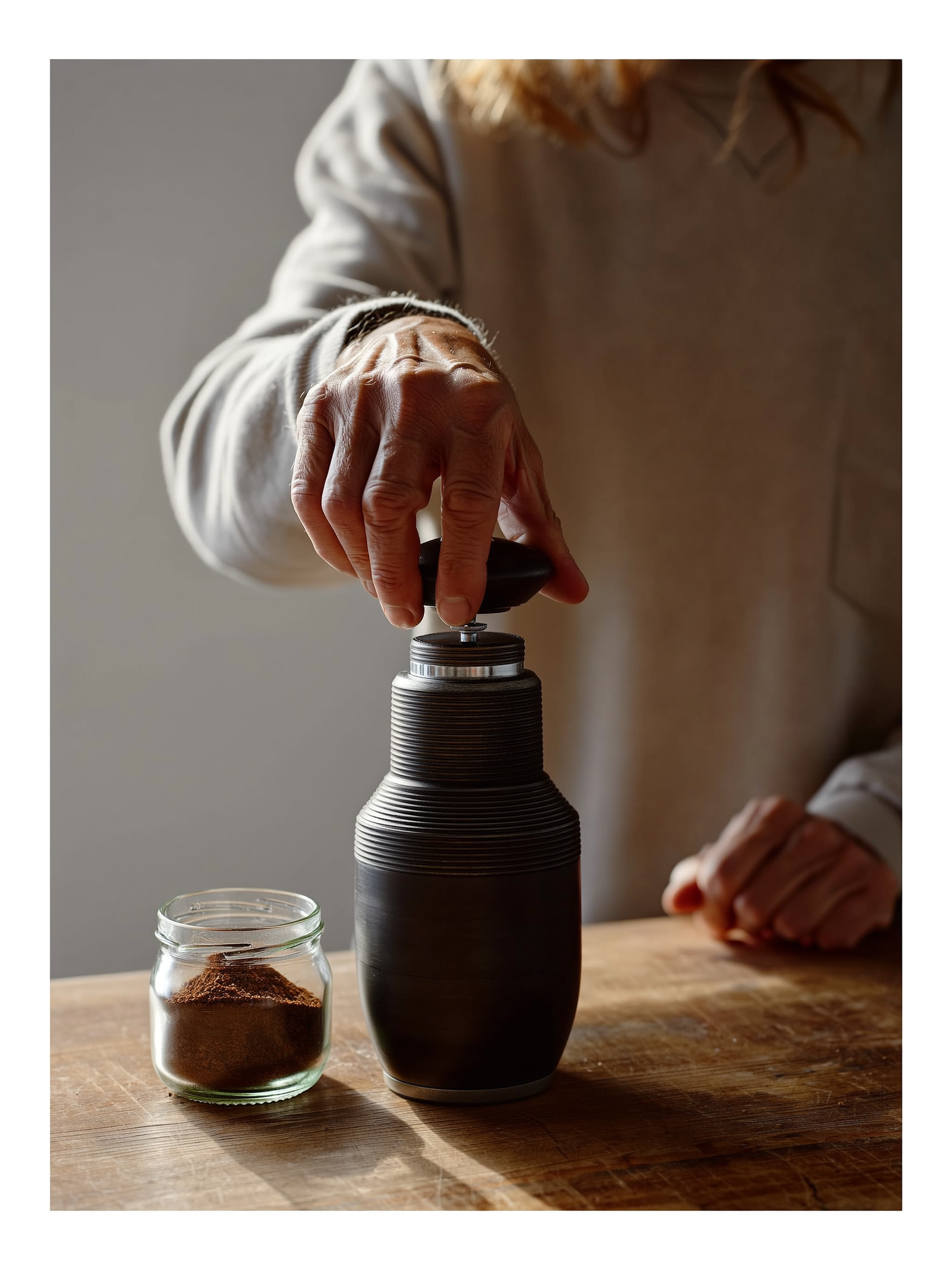
Weber Workshops The Key is a hand-powered option with 83mm conical burrs and variable RPM. The large burr diameter gives it genuinely excellent performance across both brewing styles, and zero retention is built into the hand-grinder format. It’s slower — expect 60–90 seconds per dose — but the grind quality at both ends is exceptional.
Mazzer Philos is worth considering if you find it in range. Its burr-on-demand design and broad adjustment range make it capable for dual-use, though it’s more commonly positioned as an espresso-primary machine.
Mid-Range ($150–$300)
Fellow Ode Fellow Ode Gen 2 Coffee Grinder was designed as a filter-coffee grinder first, and that heritage shows. It performs well at pour-over settings, and the flat burrs keep fines reasonable. Retention is around 1 gram — higher than ideal but manageable with single-dosing. Its espresso range is functional rather than excellent; expect to invest time dialing in.
Baratza Sette 270 is espresso-focused by design. It does have a coarse range, but switching to pour-over and back is a slower workflow, and the grind quality at coarse settings is adequate rather than impressive. It’s a better choice if espresso is 80% of your brewing and pour-over is occasional.
Budget-Friendly ($50–$150): The Hand Grinder Advantage
This is the tier most guides skip over too quickly. Hand grinders like the Comandante C40 Comandante C40 Hand Grinder and 1Zpresso JX-Pro 1Zpresso JX-Pro Hand Grinder offer near-zero retention by design (no motor, no burr chamber to trap grounds), wide and precise grind ranges, and genuinely competitive particle uniformity at both espresso and pour-over settings.
The trade-off is speed — hand-grinding 18 grams for espresso takes 45–90 seconds depending on the model. If you’re brewing one method per session and not switching mid-morning rush, hand grinders are arguably the best dual-use value available. The workflow overhead is real; the grind quality reward is also real.
The Workflow That Actually Makes It Work
Owning the right grinder is half the equation. The other half is a consistent switching routine.
Mark your dial. Use a permanent marker or a strip of tape to label your grinder’s key settings: espresso-fine, pour-over-medium, and any other methods you brew regularly. Photograph the dial positions on your phone so you have a reference. This turns a vague “somewhere around here” into a reproducible starting point.
Single-dose every brew. Weigh your beans before loading them — 16–18g for espresso, 20–25g for a standard pour-over. Grind only what you need, fresh. This eliminates hopper retention as a variable entirely.
Run a transition purge. After your last espresso shot, run the grinder empty for 5 seconds to clear residual fines. Adjust to your pour-over setting. Grind 2–3 grams and discard it. Only then grind your actual brew dose. This 30-second ritual is the difference between a clean cup and a muddy one.
Accept the performance ceiling. A dual-use grinder — even a good one — will not match the shot-to-shot precision of a $1,000+ espresso-dedicated machine, nor the particle uniformity of a purpose-built filter grinder. The honest expectation is 10–15% less optimal extraction compared to specialized gear. For most home brewers, that gap is invisible in the cup when the workflow is dialed. For competitive home baristas chasing extraction percentages on a refractometer, it’s real.
The Mistake Most Buyers Make
They shop for grind range and ignore retention. A grinder that spans Turkish to French press on the dial but retains 3 grams in the chamber will always deliver a compromised first cup after a method switch.
The second common mistake is buying an espresso-optimized grinder and hoping it “also does pour-over.” Espresso burr geometry is built around fines. It doesn’t unlearn that at coarse settings — it just makes bigger particles alongside the fines. The result is a bimodal particle distribution that extracts unevenly in a pour-over dripper.
The smarter path is choosing a grinder with larger flat burrs (65mm+), single-dose design, and precise adjustability — then treating it as a genuinely dual-use tool from day one rather than an espresso grinder with filter capability bolted on.
Bottom Line
Yes, one grinder can serve both espresso and pour-over. The Eureka Mignon Zero 65 AP is the clearest recommendation if your budget stretches to $400–$600. At the budget end, a quality hand grinder like the Comandante or 1Zpresso outperforms many electric machines in the same price bracket for dual-use reliability.
The workflow discipline — single-dosing, marked dials, transition purges — matters as much as the grinder you buy. Build the habit once, and switching methods becomes a 30-second routine rather than a dialing-in session every time.
Thinking about building your home brewing setup around one versatile machine? Our pour-over brewing routines guide covers how grind size affects extraction at each stage of the brew — useful reference as you dial in your pour-over setting on a new grinder.
Frequently Asked Questions
Can I use one grinder for both espresso and pour over?
Yes, but only with the right grinder and a consistent switching workflow. Most budget grinders technically adjust between fine and coarse, but they introduce fines that muddy pour-over cups or cause channeling in espresso pucks after switching. True dual-use grinders have low burr retention (under 0.5g) and uniform particle distribution to minimize cross-contamination.
How much does grind size differ between espresso and pour over?
Espresso requires a fine grind of roughly 200–300 microns with a 25–30 second brew time, while pour-over needs 500–700 microns and 2–4 minutes. A shift of just 50 microns can change espresso extraction time by 5–10 seconds, turning a balanced shot sour or bitter.
What is grinder retention and why does it matter for switching methods?
Grinder retention is the amount of ground coffee left in the burr chamber after the motor stops—typically 0.2–3 grams depending on the model. High retention means your first brew after switching methods pulls from a blend of old and new grounds, clouding flavor. Low-retention grinders (under 0.5g like the Eureka Mignon Zero 65 AP) switch cleanly without needing a purge ritual.
Why do espresso grinders produce fines that ruin pour over?
Espresso burr geometry deliberately creates ultra-fine particles (under 150 microns) because their high surface area helps build extraction pressure. Those same fines clog pour-over filters, slow draw-down, and create a murky, bitter taste that no pouring technique will fix.
Sources
- The 13 Best Coffee Grinders for Home [No *BS Guide ]
- Best Espresso Grinder for Switching to Pour-Over Daily
- “Best” Grinder for Espresso & Pour Over
- Best “all in one” grinder to go back and forth between espresso and pourover (under $1000)? – Page 2
- Espresso machine
- Best Burr Grinder for Pour Over – Daniel Norris