TL;DR
- Decaf retains 97-99% of coffee's ritual and flavor while eliminating caffeine that disrupts sleep for sensitive sleepers.
- Swiss Water and CO₂ decaffeination preserve flavor better than older solvent methods; check labels for processing type.
- Single-origin medium roast decafs deliver more complexity than dark roasts or generic commercial blends.
Decaf Evening Coffee Routine for Sensitive Sleepers
If you love coffee but find yourself staring at the ceiling at 11pm wondering why that 7pm cup seemed like a good idea — this post is for you.
Sensitive sleepers often feel like they have to choose between their coffee ritual and a decent night’s rest. The good news? You don’t. A well-crafted decaf evening routine gives you the warmth, the flavor, and the comforting ritual of coffee without sabotaging your sleep.
Here’s how to build one that actually works.
Why Decaf Coffee Works for Evening Routines
Decaf coffee retains 97–99% of the coffee experience. The aroma, the warmth, the flavor complexity, the act of brewing — all of it is still there. What’s missing is the caffeine that keeps your nervous system buzzing when it should be winding down.
For sensitive sleepers, that difference is everything.
There’s also a psychological angle worth understanding. Evening coffee routines serve as a ritual signal — a moment to slow down, settle in, and shift from the day into nighttime mode. Swapping caffeinated coffee for quality decaf means you keep that transition ritual intact, which genuinely supports sleep hygiene.
The one catch: not all decaf is created equal. Cheap, poorly processed decaf can taste flat and oddly bitter — and that disappointing experience is why many people write off decaf entirely. The solution is understanding how decaf is made and what to look for.
Choosing the Right Decaf Beans for Your Palate
The decaffeination process makes a significant difference in what ends up in your cup.
Swiss Water Process and CO₂ decaffeination are the two methods that preserve the most flavor complexity. Swiss Water Process uses only water and activated charcoal filters to remove caffeine — no chemical solvents, which is why it’s the preferred option for those seeking organic or clean-label beans. CO₂ extraction is a more precise method that’s gentler on delicate flavor compounds, though it’s more expensive to produce, so it appears less frequently on the market.
Older solvent-based methods (using methylene chloride or ethyl acetate) are still common in commercial decaf. They’re generally considered safe, but they can strip more of the bean’s natural oils and aromatics, leaving you with a flatter-tasting cup. Worth checking the label before you buy.
Single-origin decafs are worth seeking out. Ethiopian natural-process decafs can still carry fruity, wine-like notes. A Colombian washed decaf often delivers the clean, nutty sweetness the origin is known for. These aren’t watered-down versions of real coffee — they’re distinct, interesting cups in their own right.
Roast level matters too. With decaf, medium roasts tend to highlight origin characteristics better than dark roasts. Dark roasting can flatten the more delicate flavor compounds that decaffeination already stresses. If you usually drink dark roast, a medium-dark might be a better compromise.
Best Brewing Methods for Decaf Evening Coffee
The brewing method shapes the cup just as much as the beans. Here are three approaches that work especially well for decaf:
Pour-over (V60, Chemex, Kalita Wave) is one of the best methods for showcasing decaf’s subtler flavors. The controlled flow rate and clean extraction let you taste origin notes clearly without the heaviness that can mask complexity. It’s also a genuinely meditative brewing process — perfect for an evening wind-down.
French press is a great choice if you prefer a fuller-bodied cup. The immersion brewing method extracts more oils from the grounds, giving decaf a richness it might otherwise lack. Just be careful not to over-steep — 4 minutes is usually the sweet spot.
Espresso-based drinks like decaf lattes or cappuccinos DeLonghi Dedica Style Espresso Machine work particularly well because the milk and technique complement the flavor profile naturally. If your decaf has any perceived flatness, well-textured milk foam takes care of it entirely. This is also a great option if you want something that feels more indulgent as part of your evening ritual.
Cold brew decaf is worth mentioning too. It requires a longer steep time — 12+ hours — to extract full flavor, but the payoff is a smooth, low-acidity concentrate you can refrigerate and use throughout the week. Prep a batch on Sunday night and you have effortless decaf ready for every evening.
Step-by-Step Evening Decaf Brewing Routine
Here’s a simple, repeatable routine that works for most brewing methods:
1. Grind just before brewing.
Pre-ground decaf goes stale quickly. A burr grinder makes a noticeable difference in flavor quality. Aim for medium-fine for pour-over, medium for drip, and coarse for French press.
2. Mind your water temperature.
For regular coffee, 200–205°F (93–96°C) is standard. With decaf, dialing it back slightly — to around 195–200°F (90–93°C) — helps avoid over-extraction of decaf’s more delicate compounds, which can turn bitter quickly. If you’re using an electric kettle without temperature control, just let boiled water sit for 30–60 seconds before pouring.
3. Use your standard brew ratio.
Decaf doesn’t need a different coffee-to-water ratio. Start with 1:15 (1g of coffee to 15g of water) and adjust to taste.
4. Time your brew strategically.
Aim to finish your evening cup 2–3 hours before bed. Even trace amounts of caffeine take time to metabolize, and giving your body that buffer helps ensure the ritual supports sleep rather than working against it.
5. Slow down the process.
This is the part that matters most for a true evening routine. Don’t rush. Whether you’re doing a pour-over bloom or watching the French press steep, treat the brewing as part of the ritual, not just a means to the cup.
Making Your Decaf Routine Ritual-Rich
Here’s something worth saying plainly: the ritual around coffee matters just as much as what’s in the cup.
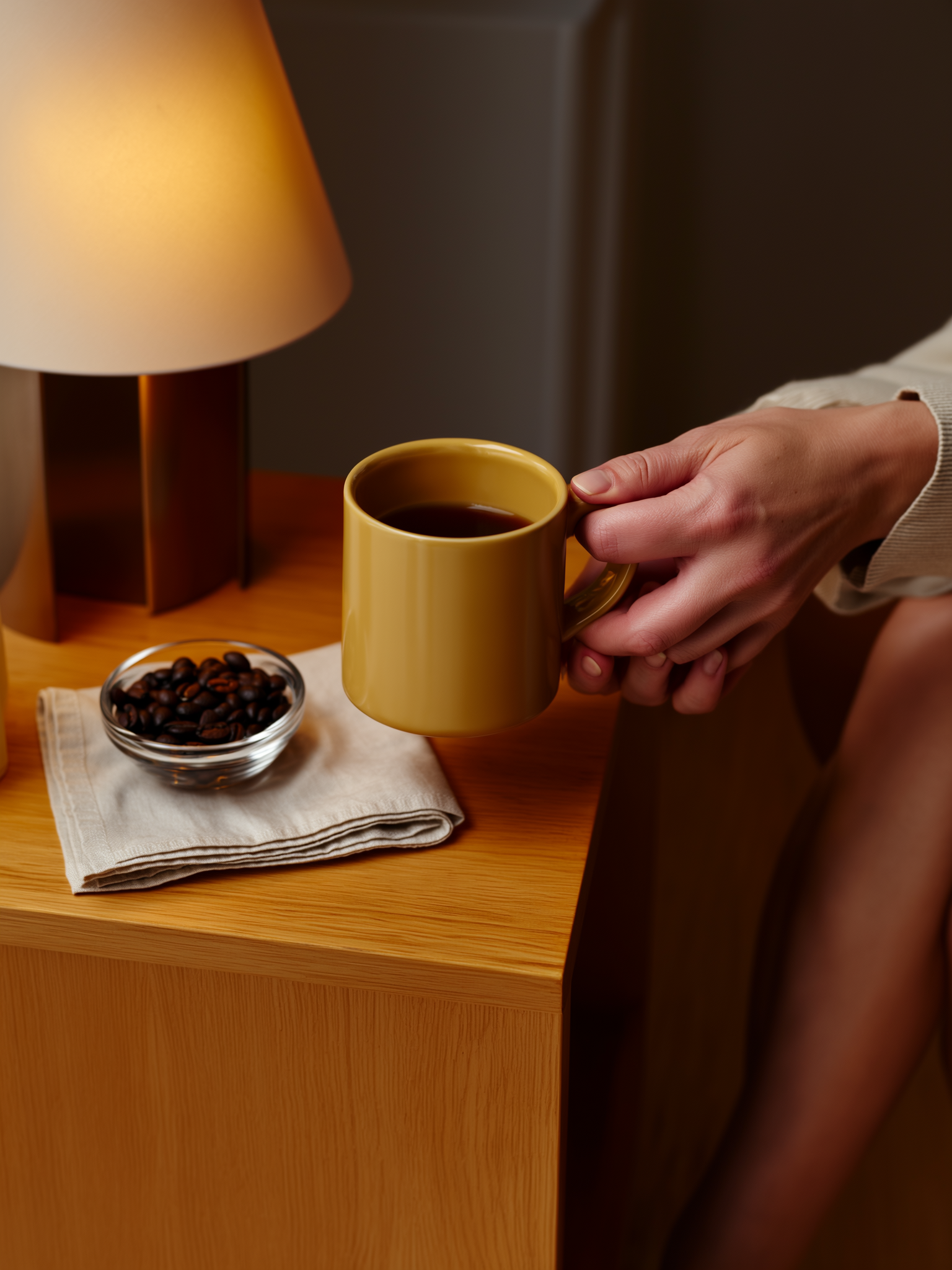
The act of brewing, the warmth of the mug in your hands, the smell of fresh grounds — these sensory signals carry real psychological weight. When you build them into an evening routine consistently, they become cues that tell your body it’s time to shift toward rest.
A few ways to make the ritual count:
- Set the environment. Dim your lights when you start brewing. Put on something calm — quiet music, a podcast you enjoy, or just silence. Avoid screens if you can.
- Add a little warmth or sweetness. A splash of oat milk, a small drizzle of honey, or a dusting of cinnamon can elevate your decaf cup into something that feels genuinely indulgent. Oatly Barista Edition Oat Milk
- Use your favorite vessel. This sounds small, but it isn’t. Drinking from a mug you genuinely love adds a layer of sensory satisfaction that matters. If your everyday mugs are just functional, an evening decaf routine is a good excuse to find one that feels special.
- Pair it with something quiet. A book, journaling, stretching, or simply sitting without a task. The goal is to signal to your nervous system that the active part of the day is done.
Decaf vs. Regular Coffee: What Sensitive Sleepers Should Know
Decaf isn’t entirely caffeine-free — and that’s worth understanding clearly.
Most decaf contains 2–5mg of caffeine per 8oz cup, compared to roughly 95mg in a standard cup of regular coffee. For most sensitive sleepers, that’s negligible. But if your sensitivity is very high, or if you’re drinking multiple cups in an evening, it can add up.
Individual sensitivity varies widely. Some people need their decaf cutoff as early as 4pm to sleep well. Others can drink it right after dinner with no noticeable effect. Neither response is unusual — caffeine metabolism is genuinely different from person to person, influenced by genetics, body weight, gut microbiome, and other factors.
The best approach: track your sleep quality over one to two weeks after introducing evening decaf. Note what time you drank it and how you slept. You’ll find your personal window faster than any general guideline can tell you.
One more thing: if you’re used to caffeinated coffee in the evenings, switching to decaf might feel anticlimactic at first. Give it a week. The ritual anchors itself quickly, and the sleep improvement tends to be noticeable enough to make the adjustment worthwhile.
Storing and Sourcing Decaf for Freshness
Freshness matters more with decaf than most people realize. The decaffeination process puts the beans through additional stress, which can accelerate staleness. Buying fresh beans and storing them well makes a genuine difference.
Buy in smaller quantities. A 250g or 500g bag is ideal. Large bulk purchases might seem economical, but decaf coffee is best within 2–3 weeks of the roast date for peak flavor. Check the packaging — specialty roasters almost always print the roast date, not just a best-by date.
Store properly. An airtight container, kept away from direct light and heat, is all you need. A kitchen counter away from the stove works fine. Avoid the refrigerator — the moisture and temperature fluctuations introduce off-flavors.
Source from specialty roasters. This is the single biggest upgrade you can make. Specialty coffee roasters treat decaf as a serious product, not an afterthought. Many roast their decaf in smaller batches, use Swiss Water or CO₂ processing, and source quality single-origin green beans. The flavor difference compared to supermarket decaf is often significant.
If you don’t have a local specialty roaster, online options ship fresh-roasted beans directly to your door. It’s worth the extra step, especially for a routine you’re going to repeat every evening.
Start Small, Adjust as You Go
You don’t need to overhaul anything to start an evening decaf routine. Pick one brewing method you already enjoy, grab a bag of quality Swiss Water Process decaf, and brew it tonight — 2 hours before you plan to sleep.
That’s it. The ritual builds from there on its own.
Sensitive sleepers don’t have to give up their relationship with coffee. They just need to approach the evening cup a little more intentionally. Done well, a decaf evening routine isn’t a consolation prize — it’s genuinely something to look forward to.