TL;DR
- Liberica represents less than 2% of global coffee production, making it rarer than Arabica or Robusta.
- Native to West Africa, Liberica nearly disappeared after Arabica plantations recovered from 1870s leaf rust.
- Liberica beans are distinctly larger and asymmetrical; the Philippines keeps the culture alive through local Barako coffee.
What Is Liberica Coffee — And Why Is It So Hard to Find?
Most coffee drinkers know Arabica. Many know Robusta. But ask about Liberica, and you’ll usually get a blank stare.
That’s not surprising. Liberica accounts for less than 2% of global coffee production. In a world where billions of cups are brewed every day, that’s a vanishingly small slice — and yet, among specialty coffee enthusiasts, it’s become something of a holy grail.
If you’ve ever wondered what it tastes like to drink a coffee that almost disappeared from history entirely, Liberica is your answer.
The Forgotten Coffee Species
Before diving in, here’s a quick reality check on the numbers: Arabica dominates roughly 60% of global production, while Robusta takes up around 40%. That leaves Liberica and a few closely related varieties (like Excelsa) fighting over the remaining scraps.
That extreme rarity is exactly what makes Liberica fascinating. It’s not a novelty cooked up by marketing teams — it’s genuinely scarce, genuinely different, and genuinely hard to track down. More and more specialty roasters are treating it as a serious tasting experience rather than a curiosity, and curious home brewers are taking notice.
So what exactly is Liberica — and how did it nearly vanish from the coffee world entirely?
Origin and History: A Survival Crop That Almost Got Forgotten
Liberica coffee (Coffea liberica) is native to West Africa, specifically the region that is now modern-day Liberia. For centuries it grew wild in tropical lowland forests, largely ignored by the global coffee trade while Arabica ruled the market.
That changed dramatically in the 1870s.
A devastating fungal disease called coffee leaf rust swept through Arabica plantations across Asia, wiping out crops in Sri Lanka, Indonesia, and much of Southeast Asia almost overnight. With Arabica supply collapsing, colonial growers needed a replacement fast. Liberica, with its natural disease resistance and tolerance for lowland humidity, stepped in.
For a brief period, Liberica was the coffee holding up global supply. It was planted extensively across the Philippines, Indonesia, and parts of Malaysia.
Then Arabica recovered — new resistant varieties were developed, and plantations were rebuilt — and Liberica was quietly pushed aside. It never fully disappeared, but it lost its commercial footing. Today, the Philippines remains one of the only countries where Liberica (locally called Barako) still holds genuine cultural significance and is consumed as part of everyday coffee culture.
How to Spot a Liberica Bean
If you’ve ever held Arabica beans in your hand, you know they’re already a decent size. Liberica makes Arabica look modest.
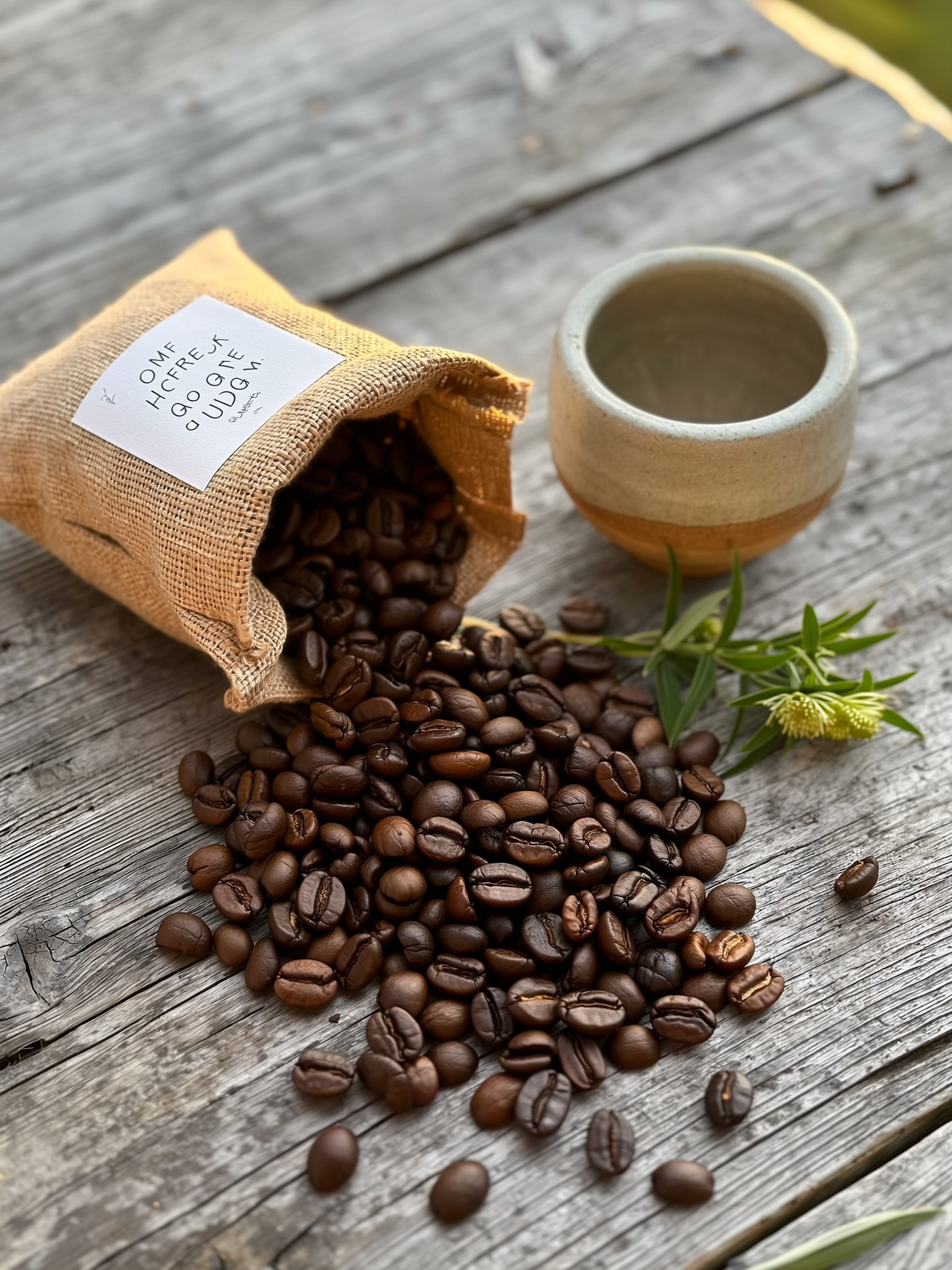
Liberica beans are noticeably larger — sometimes dramatically so — and they have an irregular, asymmetrical shape with a distinctive flat side. The skin is thicker and the overall structure is denser than either Arabica or Robusta. When you see them side by side with regular beans, the difference is immediately obvious.
A few quick identifiers:
- Size: Significantly larger and more elongated than Arabica
- Shape: Asymmetrical, with an irregular flat side — no two beans look quite alike
- Skin: Thicker and tougher, which affects how heat penetrates during roasting
- Caffeine: Around 1.4%, sitting between Arabica (roughly 1.2%) and Robusta (up to 2.7%)
That dense structure means Liberica requires careful attention during roasting. Roast it too fast or at the wrong temperature, and the outer layers char before the interior is properly developed — leading to harsh, over-extracted bitterness in the cup.
Flavor Profile: Smoky, Woody, and Absolutely Polarizing
Here’s where things get interesting — and where opinions genuinely split.
Liberica does not taste like Arabica. It doesn’t taste like Robusta either. It occupies its own distinctive corner of the flavor spectrum.
The dominant tasting notes most people encounter are:
- Tobacco — a dry, slightly sweet smokiness
- Woody spice — like cedar or dry bark
- Leather — earthy and full-bodied
- Occasional floral or fruity undertones — especially in lighter roasts or carefully processed beans
Some tasters describe a faint sweetness underneath the smoky exterior. Others find the smoke and wood notes too intense for daily drinking. Occasionally you’ll find tasting notes that edge toward burnt wood or ash — which sounds unappealing but, in the right context, reads as distinctive character rather than a flaw.
The honest comparison: Arabica tends toward brightness, acidity, and sweetness. Robusta brings heaviness, bitterness, and a strong caffeine punch. Liberica sits somewhere in between, but off to the side — it has the body of Robusta without as much bitterness, and some of the complexity of Arabica without the brightness.
It’s a divisive cup. Some home brewers find it genuinely exciting. Others try it once and return to their usual bag of Ethiopian Arabica. Both reactions are completely valid.
Why Liberica Is So Rare: The Supply Problem
The flavor alone doesn’t explain Liberica’s scarcity. The real reasons are economic and structural.
Yields are low. Liberica plants produce fewer cherries per plant than Arabica. For a farmer calculating their annual income against labor and land costs, that’s a significant disadvantage.
Climate requirements are narrow. Liberica grows best in humid tropical lowland conditions — a specific range that limits where it can be cultivated commercially. It can’t simply be planted anywhere Arabica grows.
The farmer base is small. Because commercial demand has historically been low, very few large-scale operations have invested in Liberica cultivation. Most production comes from small family farms in the Philippines and Indonesia, with smaller quantities from Malaysia and parts of West Africa.
Supply bottlenecks are geographic. When almost all your global supply comes from two or three regions, any disruption — weather events, logistical challenges, crop issues — hits the entire market simultaneously.
The result is a price premium that reflects genuine scarcity: Liberica typically runs 2–3x the cost of comparable Arabica beans. That’s not padding or marketing — it’s the real cost of sourcing something this niche through specialty supply chains.
How to Brew Liberica Coffee at Home
If you do manage to get your hands on Liberica beans, how you brew them matters.
Start with a medium to dark roast. Lighter roasts can make Liberica’s woody and earthy notes feel thin and underdeveloped. Medium-dark to dark roasts bring out the body and round off some of the rougher edges in the flavor profile.
Choose brew methods that showcase body. Liberica shines in immersion and pressure-based methods:
- French press — long steeping time pulls out the full body and earthy character without stripping it of complexity
- AeroPress — flexible and forgiving; allows you to adjust pressure and steep time to dial in the extraction
- Espresso — concentrates the smoky, woody character into something intense and genuinely unusual
Brew slightly hotter than you would with Arabica. Water temperature around 200–205°F (93–96°C) works well. Liberica’s dense structure needs that extra heat to extract properly — too low and the cup tastes flat and underdeveloped.
Grind fresh, grind right. Because the beans are denser and more irregular in size, a quality burr grinder with adjustable settings will serve you much better than a blade grinder. Baratza Encore Conical Burr Coffee Grinder Consistent particle size matters more with Liberica than with more forgiving beans.
Where to Find and Buy Liberica Beans
This is the practical challenge. You won’t find Liberica at most grocery stores, and even many specialty coffee shops don’t carry it.
Your best options:
- Specialty online roasters — Search for roasters that specifically highlight heritage or single-origin sourcing. Some offer curated “world coffee” sampler sets that include Liberica alongside other rare varieties.
- Philippine Liberica (Barako) — From the Benguet province and the Batangas region; the most historically significant and widely available Liberica variety for English-language shoppers.
- Indonesian Liberica — Often comes from Kalimantan or Sumatra; slightly less common but increasingly available through specialty importers.
What to expect on price:
- $8–15 per 100g is typical for single-origin specialty Liberica
- $25–40 per pound for quality whole beans from reputable roasters
- Blended Liberica (mixed with Arabica) can be a cheaper entry point if you want to taste the flavor without committing to a full specialty bag
A note on freshness: Liberica’s flavor deteriorates quickly after roasting, like all specialty coffee. Always buy from roasters who print the roast date clearly on the bag, and aim to brew within 2–4 weeks of that date.
Is Liberica Worth Trying?
Here’s the honest answer: it depends on what you’re looking for.
If you want your morning coffee to be familiar, comforting, and exactly what you expect — Liberica probably isn’t your daily driver. Its smoky, woody, polarizing flavor profile asks more of you than a well-dialed Ethiopian pour-over or a classic Brazilian espresso blend.
But if you’re genuinely curious about the full range of what coffee can taste like — if you enjoy exploring unfamiliar flavor territory — Liberica is a genuinely rewarding experience. It’s rare in a way that’s historically meaningful, not manufactured. It survived a near-extinction event. It carries the flavor of a part of coffee history that almost got erased.
There’s also a growing conversation in specialty coffee circles about preserving lesser-known species and varieties as part of a broader effort to maintain coffee biodiversity. Trying Liberica isn’t just a novelty — it’s a small act of engagement with that wider story.
Try it as a tasting experience first. Brew it in a French press, take your time with the cup, and approach it with curiosity rather than expecting it to replace your usual go-to.
You might love it. You might decide once was enough. Either way, you’ll have tasted something genuinely rare — and that’s worth something in itself.