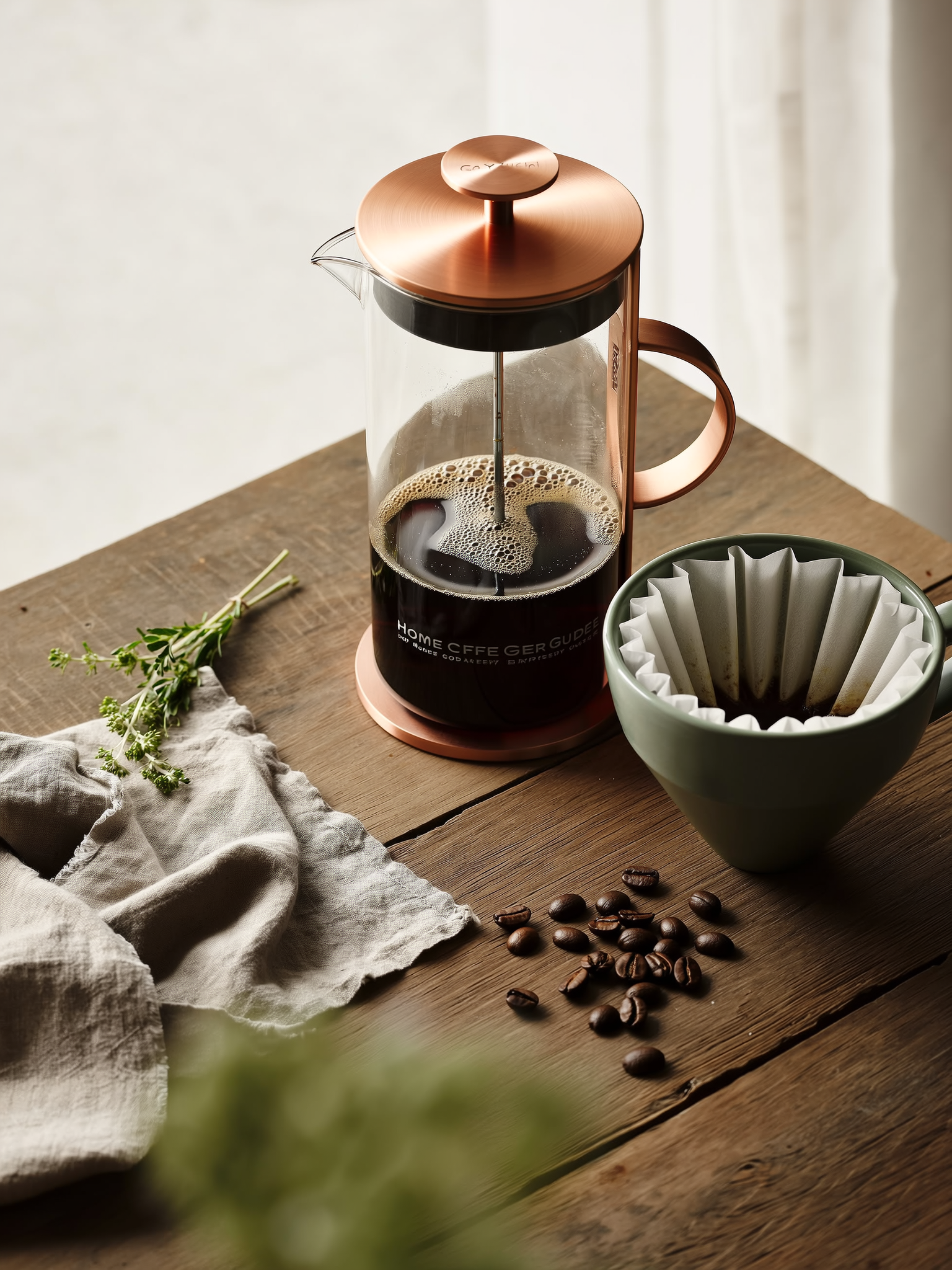
TL;DR
- French press produces full-bodied coffee with oils intact; pour-over yields cleaner, brighter cups with origin character highlighted.
- French press needs 4-minute steeps and coarse grinds; pour-over demands precision pouring and medium-fine grounds for best results.
- Choose French press for dark roasts and richness; pick pour-over to showcase light roasts and single-origin complexity.
French Press vs. Pour-Over: Which One Actually Makes Better Coffee at Home?
French press and pour-over are the two most debated home brewing methods for a reason — they produce dramatically different cups from the same beans, and choosing the wrong one for your taste or routine can quietly ruin your mornings. The good news: there’s no objectively superior method. There’s only the right method for you.
This guide breaks down exactly what separates these two approaches — flavor, texture, grind requirements, time investment, and practical trade-offs — so you can make a confident choice instead of guessing.
Why These Two Methods Dominate Home Coffee Culture
Walk into any specialty coffee shop or browse r/Coffee for five minutes and you’ll see both methods everywhere. That’s not a coincidence.
French press and pour-over represent opposite ends of the home brewing philosophy. French press is immersion brewing — coffee and water sit together, extracting passively. Pour-over is percolation brewing — water moves through coffee continuously, filtering as it goes.
Both are relatively affordable, both are manual (no pods, no complicated machines), and both produce genuinely excellent coffee when used correctly. The question isn’t which is “better” in the abstract. It’s which delivers what you actually want in your cup.
French Press: Full Immersion, Full Body
How It Actually Works
Drop coarsely ground coffee into the press, pour hot water over it, wait four minutes, press the plunger, pour. That’s it.
The steeping mechanism is the key. Coffee grounds are fully submerged in water for the entire brew time, which means coffee oils — the compounds responsible for body, richness, and that silky mouthfeel — remain in your cup. The metal mesh filter lets those oils through. What you get is a heavier, more full-bodied brew than almost any other home method can produce.
Timing Matters More Than Most People Realize
Four minutes is not a loose suggestion. Research shows that French press hits optimal extraction at around 4 minutes: steep less than 3 minutes and you’ll get a weak, under-extracted cup; go beyond 4 minutes and bitterness starts creeping in. Set a timer every single time.
Best Beans for French Press
French press rewards darker roasts and natural-process coffees. The full-immersion method amplifies body and richness, which plays well with the chocolate, caramel, and stone-fruit notes common in darker or naturally processed beans. Single-origin light roasts can get muddy and flat through a French press — not because the method is inferior, but because it’s not built to highlight delicate acidity and floral notes.
Pour-Over: Precision, Clarity, and Origin Character
How the Method Works
Pour-over brewing involves manually pouring hot water over ground coffee sitting in a dripper (like a Hario V60 Ceramic Coffee Dripper or Kalita Wave Pour-Over Coffee Dripper) fitted with a paper filter. Water passes through the grounds and drips into a vessel below.
The paper filter does something the French press metal mesh can’t — it traps coffee oils and most fine particles. The result is a cleaner, brighter cup where origin flavors, acidity, and subtle aromatics come through clearly.
Pour-over has become closely associated with specialty coffee because it can reveal origin character with unusual clarity.
Active Control Is Both the Feature and the Challenge
Your pouring technique directly controls extraction. Water temperature, pour speed, bloom time (wetting the grounds first to release CO₂), and pour pattern all shape the final cup. This is more demanding than French press — you can’t walk away and check your phone mid-brew without affecting results.
For beginners, this active involvement can feel like a lot. But it also means you have real control over the outcome once you learn the variables.
Best Beans for Pour-Over
Light to medium roasts, washed-process single-origin beans, and anything with prominent floral or fruit notes tend to shine through pour-over. The filter clarity lets those characteristics express themselves without being buried under a heavy body.
Flavor Profile Comparison: What Actually Ends Up in Your Cup
This is where the practical difference becomes undeniable.
French press produces:
– Heavier, syrupy texture
– Pronounced coffee oils on the palate
– Bold, rounded flavor with less brightness
– Some fine sediment at the bottom of the cup (unavoidable with a mesh filter)
Pour-over produces:
– A cleaner, lighter cup with bright, nuanced flavors
– Higher perceived acidity and more distinct flavor notes
– No sediment, no oil sheen
– More clarity across the aromatics
Neither profile is better. They’re genuinely different experiences. French press drinkers often find pour-over thin or sour. Pour-over fans can find French press heavy and muddy. Both reactions make sense given what each method does.
One thing that applies equally to both: poor beans taste poor through both devices. The method amplifies what’s already in your coffee. A cheap, stale supermarket blend won’t be rescued by expensive equipment.
Grind Size and Bean Prep: Where Most Beginners Go Wrong
French Press Grind Requirements
French press requires a coarse grind — roughly the texture of coarse sea salt. This is non-negotiable for two reasons:
- Fine grounds pass through the metal mesh filter directly into your cup, creating gritty, over-extracted coffee.
- Finer grinds dramatically increase extraction speed, which combined with a 4-minute steep, produces bitterness.
The standard brew ratio is approximately 1 gram of coffee per 15 grams of water. This is a reasonable starting point — adjust slightly based on your taste preference.
Pour-Over Grind Requirements
Pour-over needs a medium-fine grind for most drippers. Grind too coarse and water passes through too quickly, under-extracting. Grind too fine and water flow slows to a drip, over-extracting and producing harsh, bitter notes.
The right grind for your specific dripper depends on its design. The V60 tends to work with a slightly finer grind than the Kalita Wave because the V60 drains faster.
The Grinder Point Nobody Wants to Hear
For both methods, grinder quality matters more than brewer quality. A $25 pour-over dripper with a decent burr grinder will outperform a $100 dripper paired with a blade grinder. A good entry-level burr grinder runs $60 to $150 — a one-time investment that immediately improves consistency, grind uniformity, and ultimately your cup.
Blade grinders chop coffee unevenly. You end up with a mix of fine powder and coarse chunks, which means some grounds are over-extracted and some are under-extracted in the same brew. That’s the main reason home coffee tastes inconsistent for most people.
Maintenance, Cost, and Practical Considerations
French Press: Low Cost, Low Fuss, One Catch
French press is one of the most affordable quality brewing setups available. A solid glass or stainless steel press costs $20 to $40. No consumables beyond coffee.
The catch: cleaning matters more than most people account for. Coffee oils coat the mesh filter and the interior of the carafe after every brew. Skip a thorough rinse and those oils go rancid, leaving a stale, off-flavor that haunts your next cup. Disassemble the plunger, rinse all components, and let them dry after each use.
One more thing worth knowing: French press coffee contains diterpenes (cafestol and kahweol) — compounds found in coffee oils. Paper-filtered pour-over coffee removes most of these compounds, which is relevant if you have a sensitive stomach or a reason to monitor cholesterol intake. It’s not a scare tactic, just a factual difference in what the filter removes.
Pour-Over: Even Lower Upfront, Ongoing Filter Cost
A quality pour-over dripper (Hario V60 or Kalita Wave) runs $25 to $45. That’s less than most French presses, with no plunger mechanism to clean.
The ongoing cost is paper filters — typically $6 to $10 for 100 filters, depending on brand. This is a small but real recurring expense. Metal filters exist for pour-over as an alternative (and they let more oils through), but most specialty coffee brewers prefer paper for the clean cup it produces.
Pour-over cleanup is simple: discard the filter and grounds, rinse the dripper. Faster than cleaning a French press.
Time Investment: Be Honest About Your Morning
French press is genuinely “set and forget” during the steep. Boil water, pour, set a 4-minute timer, come back, press, done. Total active time is under 2 minutes.
Pour-over requires your full attention for the entire 2 to 4 minutes of the brew. You’re pouring in stages, monitoring flow rate, adjusting. It’s meditative if you enjoy that ritual. It’s annoying if you need coffee before your brain fully activates.
This is not a small point. The method you’ll actually use consistently every morning beats the theoretically superior method you skip because it’s too demanding at 6:30am.
Which Method Should You Actually Choose?
Choose French press if:
– You want a bold, full-bodied cup with minimal fuss
– You’re brewing for two or more people (easy to scale up)
– Your mornings are rushed and you want a forgiving, timer-based process
– You enjoy darker roasts or naturally processed coffees
Choose pour-over if:
– You want to explore the distinct flavors of single-origin, light-to-medium roasts
– You enjoy an active, involved brewing ritual
– You prefer a clean cup without sediment or oil
– You’re already curious about the variables of brewing and want to experiment
The real answer for most beginners: start with French press. It’s more forgiving — because all grounds are surrounded by water for the full steep time, flow rate and pouring pattern matter less, and you’re less likely to produce a bad cup while you’re still learning your ratios and timing. Once you’re getting consistent results and you’re curious about flavor clarity, add pour-over to your repertoire.
Both methods are worth owning eventually. They’re complementary, not competing.
The Bottom Line
French press delivers richness, body, and simplicity. Pour-over delivers clarity, brightness, and control. Neither produces objectively better coffee — they produce different coffee, suited to different beans, different palates, and different mornings.
Whatever you choose, invest in a burr grinder before you upgrade your brewer. That’s the single change that will improve your cup more than any other equipment decision.
Start brewing. Taste the difference. Then decide.
Frequently Asked Questions
Is French press or pour-over better for home coffee?
Neither is objectively better—it depends on your taste. French press delivers full-bodied, oil-rich coffee; pour-over produces cleaner, brighter cups that highlight origin flavor. Choose French press for richness or pour-over for clarity.
How long should you steep coffee in a French press?
Exactly 4 minutes for optimal extraction. Brewing under 3 minutes produces weak, under-extracted coffee; over 4 minutes introduces bitter flavors. Always use a timer for consistency.
What beans work best in a French press?
Darker roasts and natural-process coffees shine in French press because the full-immersion method amplifies body and richness. Light roasts can taste muddy in a French press, as the method doesn’t highlight their delicate acidity.
Why does pour-over coffee taste different from French press?
Pour-over is percolation brewing—water continuously flows through grounds, filtering out oils and producing a cleaner, brighter cup. French press is immersion brewing—grounds steep in water, keeping oils in the cup for a heavier body and richer mouthfeel.
Sources
- Comparing Coffee Brewing Techniques: French Press vs Pour Over – Ratio
- Pour Over Coffee Maker vs French Press: Which Brews Better? – Planetary Design
- Pour Over vs French Press vs Espresso: Taste Differences | Pro Coffee Gear
- French Press vs. Pour Over vs. Drip: Which is Right for You? – Methodical Coffee
- I’m a trained barista: here’s the difference between French press and pour-over coffee
- Apparatus for brewing coffee and other brewed beverages using the process of infusion and agitation