
TL;DR
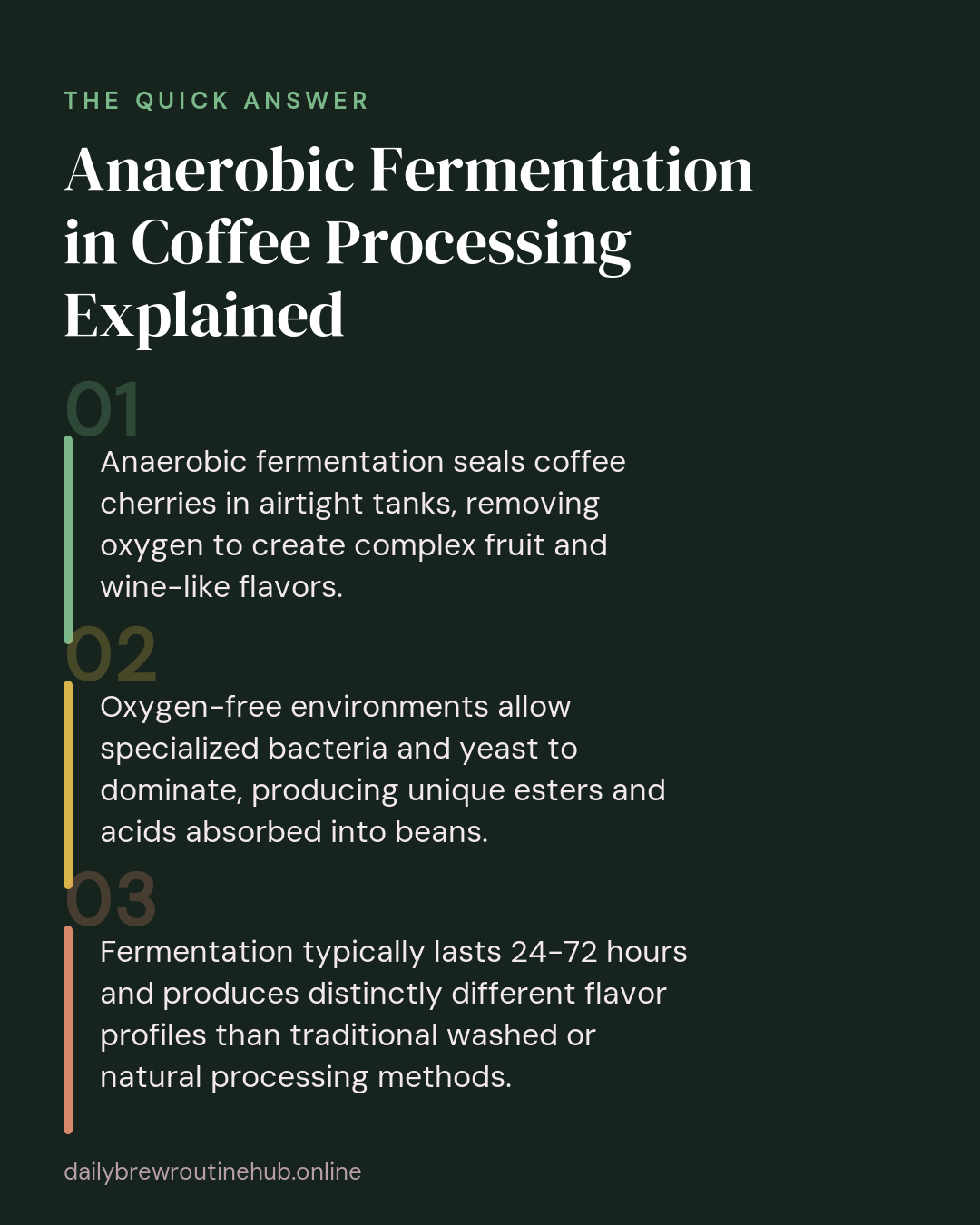
- Anaerobic fermentation seals coffee cherries in airtight tanks, removing oxygen to create complex fruit and wine-like flavors.
- Oxygen-free environments allow specialized bacteria and yeast to dominate, producing unique esters and acids absorbed into beans.
- Fermentation typically lasts 24-72 hours and produces distinctly different flavor profiles than traditional washed or natural processing methods.
What Is Anaerobic Fermentation in Coffee Processing?
If you’ve been browsing specialty coffee bags lately and noticed labels that say “anaerobic natural” or “anaerobic washed,” you’re probably wondering what that actually means. These aren’t just marketing buzzwords — anaerobic fermentation is a genuinely distinct processing method that produces some of the most complex, fruit-forward, and downright wild flavors you’ll find in a coffee cup.
This post breaks down exactly how it works, what it tastes like, and whether it’s worth seeking out for your home brewing setup.
The Science Behind Those Funky, Complex Flavors
Every coffee bean goes through some form of fermentation after harvest. It’s an unavoidable part of processing — the sugars and organic compounds in the coffee cherry need to be broken down before the bean can be dried, roasted, and brewed.
What makes anaerobic fermentation different is control. Specifically, oxygen is deliberately removed from the equation.
In traditional processing, fermentation happens in open tanks or on raised drying beds, where the coffee is exposed to air. Anaerobic fermentation flips that — producers seal the coffee cherries in airtight containers, cutting off oxygen. This shifts the entire microbial ecosystem inside the tank.
The result? Flavors that taste like tropical fruit, wine, and sometimes even spices — all from a single coffee bean.
How Anaerobic Fermentation Works: Step by Step
Here’s what actually happens inside those sealed tanks:
- Harvested cherries go into airtight vessels — typically stainless steel tanks or heavy-duty sealed bags.
- Oxygen is either displaced naturally as the cherries release CO₂ during fermentation, or actively removed by injecting CO₂ into the tank.
- Anaerobic bacteria and yeast — microorganisms that thrive specifically in oxygen-free environments — begin to dominate. In a normal aerobic environment, these microbes would be outcompeted.
- These microbes break down sugars and organic compounds in the cherry, producing alcohols, esters, and acids as byproducts.
- Those compounds are absorbed into the coffee beans over the course of the fermentation period.
The fermentation window typically runs anywhere from 24 to 72 hours, and that duration makes a real difference to the final cup — more on that shortly.
Costa Rican producer Luis Eduardo Campos is widely credited as one of the first to experiment with this technique in coffee. It broke into the global spotlight in 2015 when Australian barista Saša Šestić used anaerobically processed beans to win the World Barista Championship — putting the method firmly on the specialty coffee map.
Anaerobic vs. Traditional Coffee Processing Methods
To understand why anaerobic fermentation is special, it helps to see how it compares to the two traditional methods most coffee goes through.
Washed Process
Coffee cherries are pulped and the beans are fermented in water before being washed clean and dried. The result is a cleaner, brighter flavor profile that highlights the bean’s natural origin characteristics. Fermentation still happens, but it’s shorter and less controlled for flavor manipulation.
Natural Process
The whole cherry — fruit and all — is dried in the sun. The bean absorbs fruit sugars as it dries, creating fruity, sometimes jammy flavors. The process is less predictable because fermentation happens inconsistently across the drying bed.
Anaerobic Fermentation
By sealing the environment, producers gain a level of control that neither washed nor natural processing offers. The oxygen-free conditions favor specific microorganisms that simply don’t thrive in open-air fermentation. This precision creates those consistent, intense flavor compounds that anaerobic coffees are known for.
There’s also a hybrid dimension worth knowing: anaerobic fermentation isn’t a standalone process. It’s typically paired with one of the traditional methods — either natural drying, washing, or honey processing — after the sealed fermentation stage. This gives you variations like:
- Anaerobic natural – combines wine-forward fermentation notes with the sweetness of whole-cherry drying
- Anaerobic washed – the fermented intensity is balanced by the clarity of a water-wash finish
- Anaerobic honey – a middle ground with both fruity sweetness and structured fermentation character
The Flavor Profile: What to Expect in the Cup
This is where anaerobic processing gets genuinely exciting.
The flavor impact is significant — this technique has one of the strongest influences on a coffee’s sensory profile of any processing method. Here’s what you’re likely to notice:
Fruit-forward intensity
Expect tropical fruit notes like pineapple, coconut, and watermelon alongside stone fruits and berries. These aren’t subtle background hints — anaerobic coffees tend to lead with their fruit character.
Wine-like complexity
Many anaerobic coffees carry a winey acidity and layered complexity that reminds tasters more of a glass of wine or a fermented beverage than a conventional cup of coffee. That’s not a coincidence — the fermentation byproducts genuinely overlap.
Gentle lactic acidity and sweetness
Despite the boldness, well-processed anaerobic coffees often have a lactic acidity that feels smooth rather than sharp. Most also show a pronounced sweetness that balances the funkier notes.
Exceptional mouthfeel
Texture is one of the most talked-about aspects of anaerobic coffee. The body tends to be heavier and creamier than both washed and natural coffees — described as silky, velvety, or dense.
Fermentation duration directly shapes this texture. Research and sensory panels have noted that:
- Coffee fermented for 24 and 48 hours tends toward “medium pleasant” and “medium creamy”
- Coffee fermented for 72 hours produces “velvety/dense” and “long silky” characteristics
In other words, longer fermentation means more intensity and weight in the cup.
The Challenges: Why Anaerobic Beans Cost More
If anaerobic fermentation creates such interesting coffee, why doesn’t everyone do it?
Precision demands are high
The fermentation environment requires close monitoring of temperature, humidity, and CO₂ levels. Small swings can push the coffee from “complex and fruit-forward” to “unpleasantly sour or over-fermented.” Outdoor processing in variable climates is particularly risky.
Batch-to-batch variation
Even with sealed tanks, the wild yeast and bacteria strains present on the cherry skins vary from harvest to harvest, and sometimes day to day. Two batches from the same farm can taste noticeably different because the microbial community driving fermentation isn’t identical.
Equipment and labor costs
Stainless steel tanks, CO₂ systems, and the additional skilled labor to monitor and manage each batch add meaningful costs to production. This is reflected in the retail price — anaerobic beans typically run 20–40% higher than conventionally processed specialty coffees.
That price premium isn’t just marketing. It reflects the genuine technical difficulty and the additional resources producers invest to control a process that most farms don’t attempt.
How to Brew Anaerobic Coffee at Home
Once you have an anaerobic bean in hand, getting the most out of it at home requires a few adjustments to your usual routine.
Choose the right roast level
Anaerobic fermentation works best with medium-to-light roasts. Darker roasts tend to overpower the delicate fermented fruit compounds — you’ll lose exactly what you paid for. When buying, look for roasters who dial in these origins at a lighter development.
Match your brewing method to the complexity
Some brewing methods show off anaerobic coffee’s complexity better than others:
- Pour-over (V60, Chemex) — highlights acidity, fruit notes, and layered complexity; recommended as a starting point
- AeroPress — gives you control over pressure and steep time; great for experimenting with intensity
- Espresso — concentrates the fruit and sweetness dramatically; excellent if you enjoy a dessert-like shot
- French press — less ideal; the full-immersion method and metal filter tend to muffle the bright acidity that makes anaerobic coffees interesting
Dial in your water temperature
Anaerobic coffees can be sensitive to over-extraction, which amplifies harsh fermented notes. Start in the 195–200°F (90–93°C) range rather than pushing higher. A slightly lower temperature gives you cleaner extraction of the fruit and floral notes without introducing bitterness.
Grind fresh and keep notes
Because the flavor profile is more complex than a standard washed coffee, small changes in grind size or brew ratio make a noticeable difference. Grind fresh for every brew, and if you have a way to take notes (even a quick phone note), tracking what you changed will help you dial in the cup faster.
Is Anaerobic Fermentation Worth Trying?
Yes — with some caveats.
If you already enjoy natural-processed coffees and want to push further into experimental, fruit-forward territory, anaerobic processing is the logical next step. The flavors are bolder, the mouthfeel is more distinctive, and the complexity gives experienced coffee drinkers something genuinely new to explore.
The price premium is real, but it’s grounded in the additional skill, equipment, and attention that producers put into each batch. When budgeting for specialty coffee, expect to pay 20–30% more than a comparable washed or natural bean.
That said, not every palate enjoys these coffees. The funky, wine-like, or heavily fermented notes that one person calls complex, another person finds off-putting. If you’re new to anaerobic coffees, start with a small sample bag rather than committing to a full 250g or 12oz bag. Many specialty roasters sell 50–100g tasting portions for exactly this reason.
Quick Reference: Anaerobic Coffee at a Glance
| Washed | Natural | Anaerobic | |
|---|---|---|---|
| Fermentation environment | Open/water | Open/drying bed | Sealed, oxygen-free |
| Flavor profile | Clean, bright | Fruity, jammy | Intense fruit, wine-like, funky |
| Mouthfeel | Light to medium | Medium | Heavy, creamy, velvety |
| Consistency | High | Moderate | Variable batch-to-batch |
| Price point | Standard | Slightly higher | 20–40% premium |
Anaerobic fermentation represents one of the most significant flavor innovations in coffee processing over the past decade. Whether you find the results brilliant or overwhelming depends on your personal taste — but either way, it’s worth understanding what’s actually happening in that sealed tank before the bean ever reaches your grinder.
Curious about how processing methods affect flavor beyond fermentation? Check out our deep-dive on washed vs. natural vs. honey processing — and how each one shapes what ends up in your cup.
Sources
- What Does Anaerobic Fermentation Mean For Coffee? | Sprudge Coffee
- A Guide to Anaerobic Coffee – 1Zpresso
- How to roast anaerobically fermented coffee – Perfect Daily Grind
- A Gentle Dive Into The Science of Anaerobic Coffee Processing – Torque Coffee
- Anaerobic fermentation in coffee processing – Espresso Outlet LLC
- What is anaerobic process coffee? – JBC Coffee Roasters