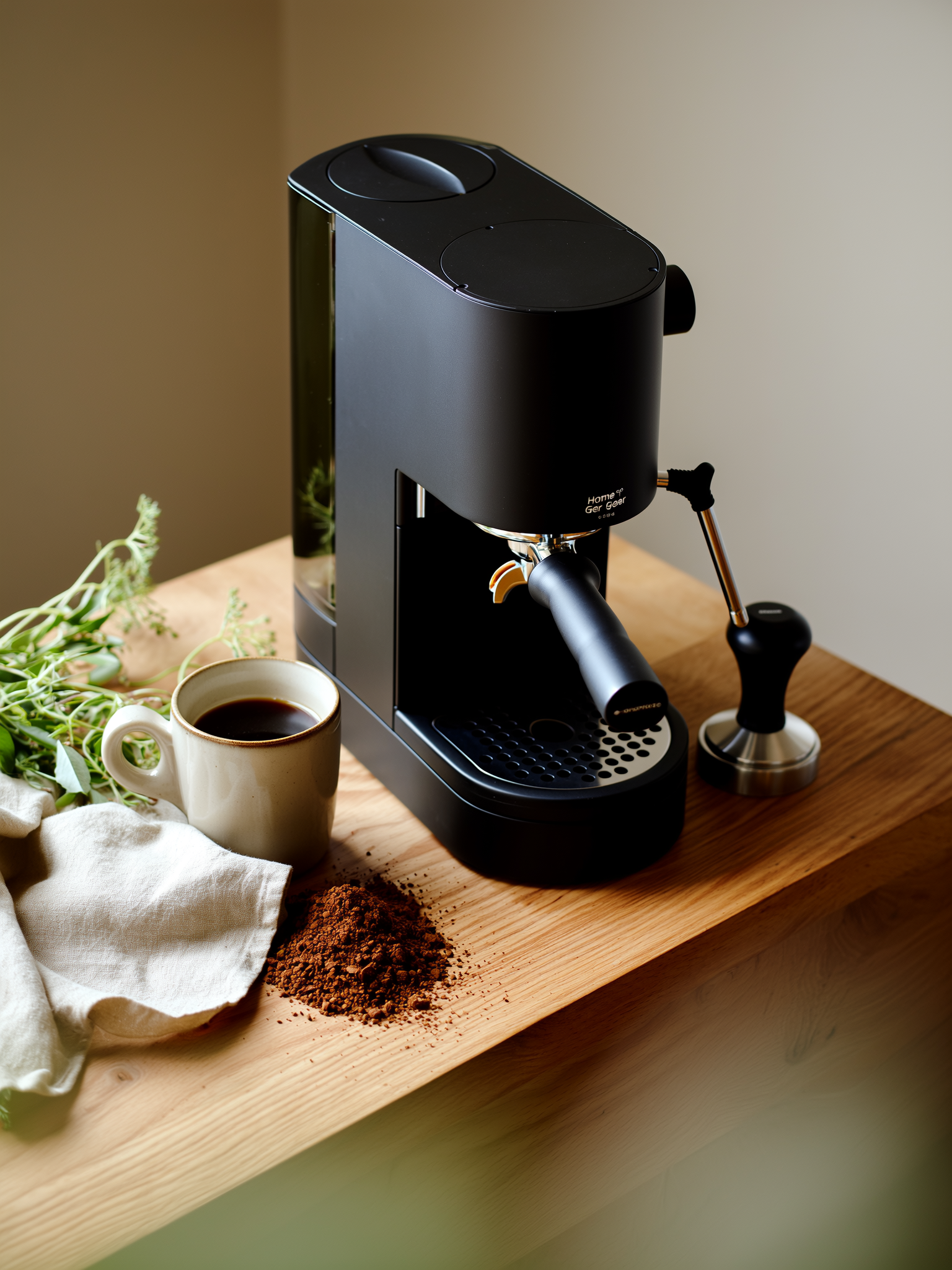
TL;DR
- All-in-one espresso machines offer convenience and lower entry cost, but built-in grinders typically use smaller burrs (40–50mm) than standalone options, compromising grind consistency.
- Separate grinder + machine setups almost always produce better espresso due to superior burr size, adjustment precision, and thermal stability—but require more counter space.
- All-in-one machines work best for beginners prioritizing simplicity; serious home baristas should budget for dedicated components instead.
All-in-One Espresso Machines vs. Separate Grinder + Machine: Here’s the Honest Answer
All-in-one espresso machines with built-in grinders sound like the dream setup — one appliance, one price, fresh-ground espresso at the push of a button. But if you’re serious about your coffee, the reality is more complicated than the marketing makes it look.
The short version: separate components almost always make better espresso. But that doesn’t automatically make all-in-one machines a bad buy. The real question is who they’re actually built for — and whether that person is you.
Let’s break it down honestly.
Why Everyone’s Suddenly Talking About All-in-One Machines
Scroll through #homebarista on TikTok or Pinterest for five minutes and you’ll notice a pattern: the most-shared setups are compact, clean, and minimal. A single machine sitting on a small kitchen counter, steaming away. No clutter, no extra equipment.
That visual appeal is driving real purchase decisions.
Brands like Breville, DeLonghi, and Gaggia have responded with a wave of all-in-one espresso machines aimed squarely at beginners who want to start their espresso journey without buying a PhD in equipment first. These machines bundle a grinder and an espresso maker into one unit, lowering both the cost and the mental barrier to entry.
For a specific type of home brewer, that’s genuinely valuable. The issue is that “all-in-one” gets sold to everyone, when it’s really the right answer for only some people.
The Grinder Inside: What You’re Actually Getting
Here’s the detail most product listings quietly skip over.
Built-in grinders in all-in-one machines typically use burrs in the 40–50mm range. A dedicated standalone grinder at a similar price point will often give you 55mm or even 65mm burrs — and burr size directly affects how uniformly the coffee is ground and how much heat is generated during grinding.
Why does that matter? Because espresso is unforgiving. Tiny inconsistencies in particle size translate directly into uneven extraction — the kind that makes your shot taste bitter, sour, or thin instead of balanced and syrupy.
The adjustment precision gap makes this worse. Most all-in-one machines offer 15–20 grind settings. Quality separate grinders like the Eureka Mignon Notte offer 40+ settings, and the best ones have stepless adjustment — meaning you can fine-tune in tiny, continuous increments rather than jumping between locked steps.
As Clive Coffee, a respected espresso equipment retailer and reviewer, puts it: “Grind quality is the single biggest variable in espresso, and built-in grinders almost always compromise on burr size, adjustment precision, or both.”
That’s not a minor technical detail. Grind quality is where espresso is won or lost.
The Temperature and Workflow Problem
Beyond burr size, there’s a subtler issue with all-in-one design: thermal interaction.
When your grinder sits directly on top of or integrated with the espresso machine, heat transfer between the two components becomes a real variable. Grinding directly in proximity to the group head can slightly raise water temperature or introduce inconsistency in a machine’s thermal profile — particularly in mid-range machines that are already sensitive to temperature stability.
Workflow is another friction point that surprises new buyers. True “push a button and walk away” espresso is rare with all-in-one machines. Most still require you to measure your beans, check the hopper, and clean the grind chute regularly. The convenience is real, but it’s not quite the magic it looks like in a 15-second TikTok.
Why Enthusiasts Keep Buying Separates
The coffee community’s preference for separate grinder + machine setups isn’t snobbery — it’s logic.
Upgrade flexibility. When you want to improve your setup, separate components let you upgrade one piece at a time. Replace a $150–$300 grinder to improve shot consistency without touching your machine. Or add a better machine later while keeping the grinder you already love. With an all-in-one, you replace everything to improve anything.
Superior grind consistency. A dedicated burr grinder — whether flat-burr or conical — is engineered to do one job extremely well. That focus shows in the results. More uniform particle sizes mean more predictable extraction, which means more repeatable, better-tasting shots.
Thermal stability. A separate workflow — grind first, then pull your shot — keeps heat sources isolated, giving your machine a cleaner thermal environment to work in.
The expert consensus is consistent: in almost every case, a separate grinder paired with a standalone espresso machine will make better espresso, last longer, and give you far more control over your results.
Real Cost Comparison: Short-Term vs. Long-Term
On paper, all-in-one machines look like the cheaper path. And upfront, they often are.
Entry-level all-in-one: $300–$600, with acceptable grind quality for beginners and real counter-space savings.
Separate grinder + compact machine: $400–$800 combined, with higher upfront cost but each piece independently upgradeable and replaceable.
The long-term picture shifts the math. If your all-in-one machine’s grinder develops a fault — a common failure point given the added mechanical complexity — you’re often facing a full machine replacement, not a simple repair. Separate machines with strong aftermarket support (like the Gaggia Classic Pro) have parts available for years. Built-in systems often don’t.
There’s also the upgrade lock-in problem to consider. When you outgrow the built-in grinder’s capabilities — and most people do once they catch the espresso bug — you’re replacing the entire machine just to get better grinding. That’s an expensive ceiling to hit.
The One All-in-One Machine That Actually Earns Its Reputation
To be fair: not all all-in-one machines are equal.
The Breville Barista Express Breville Barista Express Espresso Machine at $500–$700 is the most commonly cited exception. Its integrated conical burr grinder offers 18 grind settings — more than most all-in-ones — and provides enough range to dial in properly for most beans. Multiple sources note it as a legitimate starting point for beginners who want good espresso without buying two separate machines.
It’s not a replacement for a dedicated grinder. But it’s the all-in-one that comes closest to punching above its category.
Who Should Buy All-in-One (and Who Should Skip It)
All-in-one is a solid choice if:
– You live in an apartment with limited counter space
– You’re a complete beginner who isn’t sure how serious you’ll get about espresso
– You want one purchase decision, not two
– You’re setting up a small office coffee station
Skip the all-in-one if:
– You already own a quality standalone grinder
– You know you’ll want to keep upgrading your setup in the next year or two
– Shot-to-shot consistency matters to you — because you’ll hit the ceiling quickly
– You want to use the grinder for anything other than espresso (built-in grinders are engineered for espresso only, and switching between brewing methods is frustrating with most integrated units)
The middle-ground option most people miss: Compact separate setups can match all-in-one footprints more closely than most beginners realize. A pairing like a Baratza Encore with a compact machine doesn’t take dramatically more counter space than a large all-in-one unit, and the performance and upgrade headroom are significantly better. If you’re comparing sizes before buying, measure both options.
Making the Decision: A Simple Framework
Here’s how to think through it without overthinking:
- Are you testing whether you like espresso? All-in-one is fine. Start there.
- Do you already know you love espresso and want to get better? Buy separates from the start. You’ll hit the ceiling on an all-in-one faster than you expect.
- Is counter space genuinely your hard constraint? All-in-one wins. A machine you’ll actually use beats a better setup that feels cramped.
- Are you on a strict budget right now? An all-in-one in the $500–$700 range (specifically, the Barista Express-style units) is a reasonable short-term solution — just go in knowing it’s a starting point, not an endpoint.
The Bottom Line
All-in-one espresso machines with built-in grinders are a real trend for real reasons — they lower the barrier to entry, they save space, and for complete beginners they’re a genuinely useful on-ramp to home espresso.
But the coffee community’s preference for separate components isn’t snobbery. It’s based on a simple truth: the grinder is the most critical variable in espresso quality, and built-in grinders almost always compromise on exactly what matters — burr size, adjustment precision, and long-term upgradability.
If you think you’ll stay with espresso for more than a year, separate components offer better value, better results, and better learning opportunities. The upgrade path is cleaner, the quality ceiling is higher, and you won’t be replacing a $600 machine just to get a better grinder.
If you’re still on the fence, try spending time with an all-in-one unit before buying — hands-on experience with how dialing in grind settings actually feels on these machines is more informative than any spec sheet.
Curious where to start with a separate setup? Check out our guide to the best entry-level espresso grinders and our breakdown of compact espresso machines for small kitchens.
Frequently Asked Questions
Can an all-in-one espresso machine make good espresso?
Yes, but it’s harder. Built-in grinders typically use smaller burrs and have fewer adjustment settings than standalone grinders, which means less grind consistency and more extraction problems. You can still pull decent shots, but separate components will almost always perform better at the same price point.
What’s the main difference between a built-in grinder and a separate one?
Built-in grinders usually have 40–50mm burrs with 15–20 grind settings, while quality standalone grinders offer 55–65mm burrs and 40+ settings (or stepless adjustment). Larger, more adjustable burrs mean finer control over particle size, which directly impacts espresso quality.
Is an all-in-one espresso machine good for beginners?
Yes, if you prioritize simplicity and want to avoid buying multiple pieces of gear at once. All-in-one machines lower the mental and financial barrier to entry. Just accept that you’ll eventually outgrow it or want to upgrade the grinder separately.
Should I buy separate espresso machine and grinder or an all-in-one?
Buy separate if you’re serious about espresso quality and have counter space. Buy all-in-one if you’re new to espresso, have limited space, and value convenience over extraction precision. Separate components almost always make better espresso, but all-in-one is the right choice for some people.
Sources
- Built-In Grinder vs Separate Grinder for Espresso Machines
- All-In-Ones Vs. Standalone Semi-Auto Espresso Machines
- The Pros and Cons of Built-In Grinders
- Built-In vs Separate Grinder: Your Path to Consistent Espresso …
- Espresso Machines With A Built-In Grinder. Are They Worth It?
- Built-In Grinder vs. Separate Grinder: Which Espresso Setup Grinds …