TL;DR
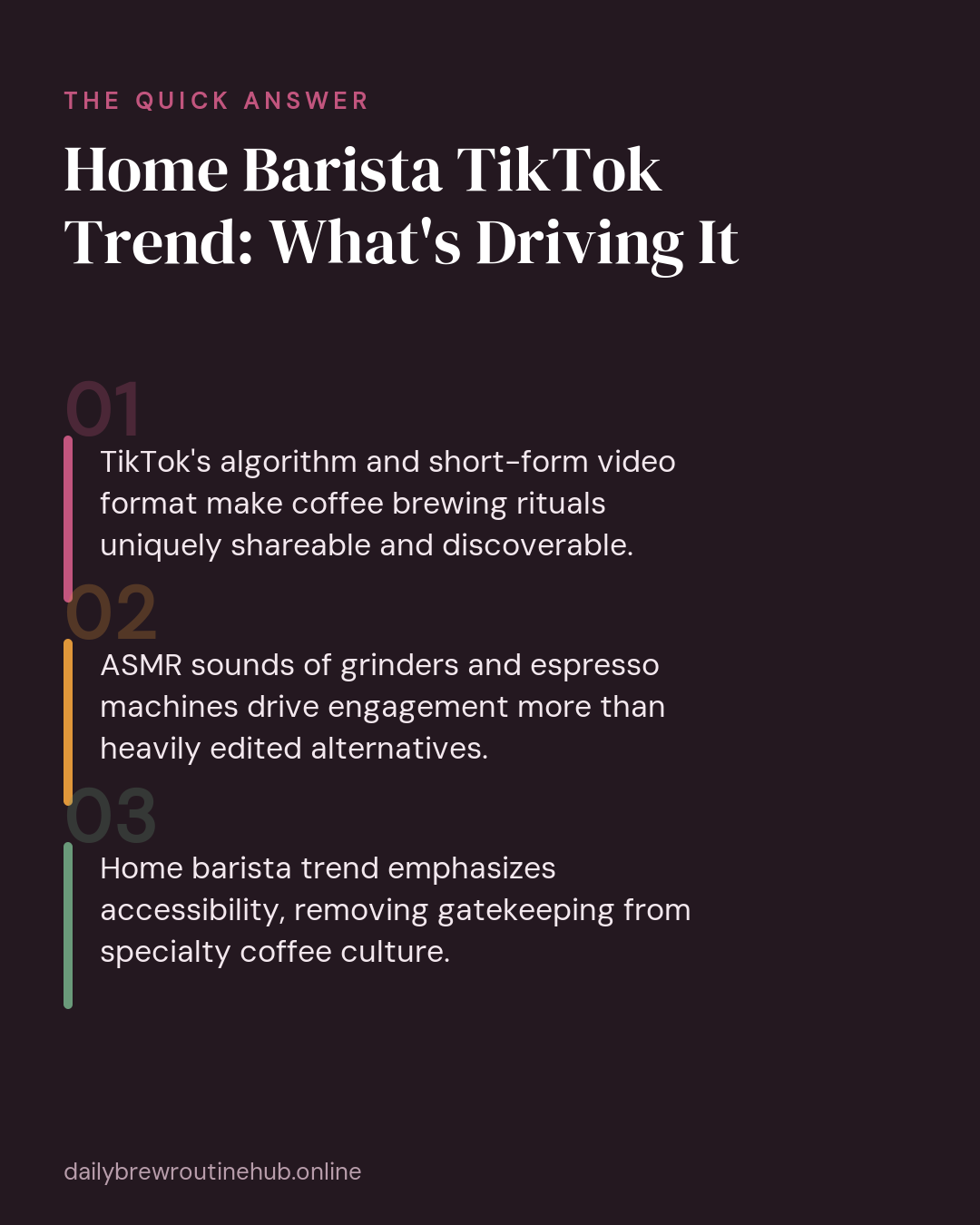
- TikTok's algorithm and short-form video format make coffee brewing rituals uniquely shareable and discoverable.
- ASMR sounds of grinders and espresso machines drive engagement more than heavily edited alternatives.
- Home barista trend emphasizes accessibility, removing gatekeeping from specialty coffee culture.
Home Barista TikTok Trend: What’s Driving It
If you’ve spent any time on TikTok in the last couple of years, you’ve almost certainly stumbled across a perfectly pulled espresso shot, a mesmerizing latte art pour, or a satisfying montage of someone’s morning brewing ritual. The #homebarista hashtag has racked up billions of views, and #coffeetiktok isn’t far behind. This isn’t a fleeting moment — it’s a genuine cultural shift, and it’s reshaping how everyday people think about coffee at home.
So what’s actually behind it? Why did home espresso go from niche hobby to mainstream aspiration almost overnight? Let’s break it down.
Why #HomeBarista Content Exploded on TikTok
TikTok’s format is uniquely suited to coffee content in a way other platforms simply aren’t.
A fifteen-second clip can capture the entire arc of a morning espresso ritual — the grind, the tamp, the pull, the pour — and deliver it in a format that’s both satisfying and short enough to watch multiple times in a row. Instagram had coffee aesthetics for years, but TikTok added sound and motion in a way that changed everything.
There’s also a discovery advantage. Unlike Instagram, where you follow accounts you already know, TikTok’s algorithm surfaces content based on behavior. That means a first-time viewer with zero interest in coffee can stumble onto a perfectly filmed cortado pour and suddenly find themselves going down a rabbit hole of grinder comparisons and espresso dial-in tutorials.
That algorithmic reach is a big reason the trend grew so fast.
The ASMR Effect: Why Coffee Sounds Are Irresistible
One of the least obvious — but most powerful — drivers of home barista TikTok is pure audio appeal.
The hiss of a steam wand. The low rumble of a burr grinder working through fresh beans. The rhythmic knock of a portafilter being emptied. These sounds are genuinely satisfying in an ASMR sense, and TikTok’s audio-first design makes them land harder than they ever did on a muted Instagram grid.
Creators figured this out early. Videos that lean into these sounds — even without voiceover or music — consistently outperform heavily edited alternatives. The sounds signal craft, quality, and care. For viewers, hearing a proper grinder working through single-origin beans communicates expertise more immediately than any caption could.
This is one reason entry-level burr grinders like the Baratza Encore Baratza Encore ESP Conical Burr Coffee Grinder kept appearing organically in viral videos — the grind sound became part of the content’s appeal, not just background noise.
Accessibility Is the Real Hook
Here’s what separates the home barista trend from previous coffee culture moments: it’s explicitly positioned as achievable.
Earlier waves of specialty coffee enthusiasm were often gatekept. Advice came with jargon, expensive gear requirements, and an implicit sense that you needed to really know what you were doing before you could participate.
TikTok flipped that entirely.
Creators lean hard into beginner narratives: “I spent $300 and made a better latte than my local café.” “My first espresso pull — be gentle.” “Day 1 vs Day 30 of learning latte art.” This framing removes the intimidation factor and invites the audience in.
Entry-level espresso machines under $500 get just as much airtime — sometimes more — than high-end professional setups. That accessibility message is commercially powerful. It tells a viewer: you can do this too, and you don’t need to spend a fortune to start.
The Gear That’s Actually Showing Up in These Videos
It’s worth looking at which gear categories are getting traction, because it tells you a lot about who’s watching.
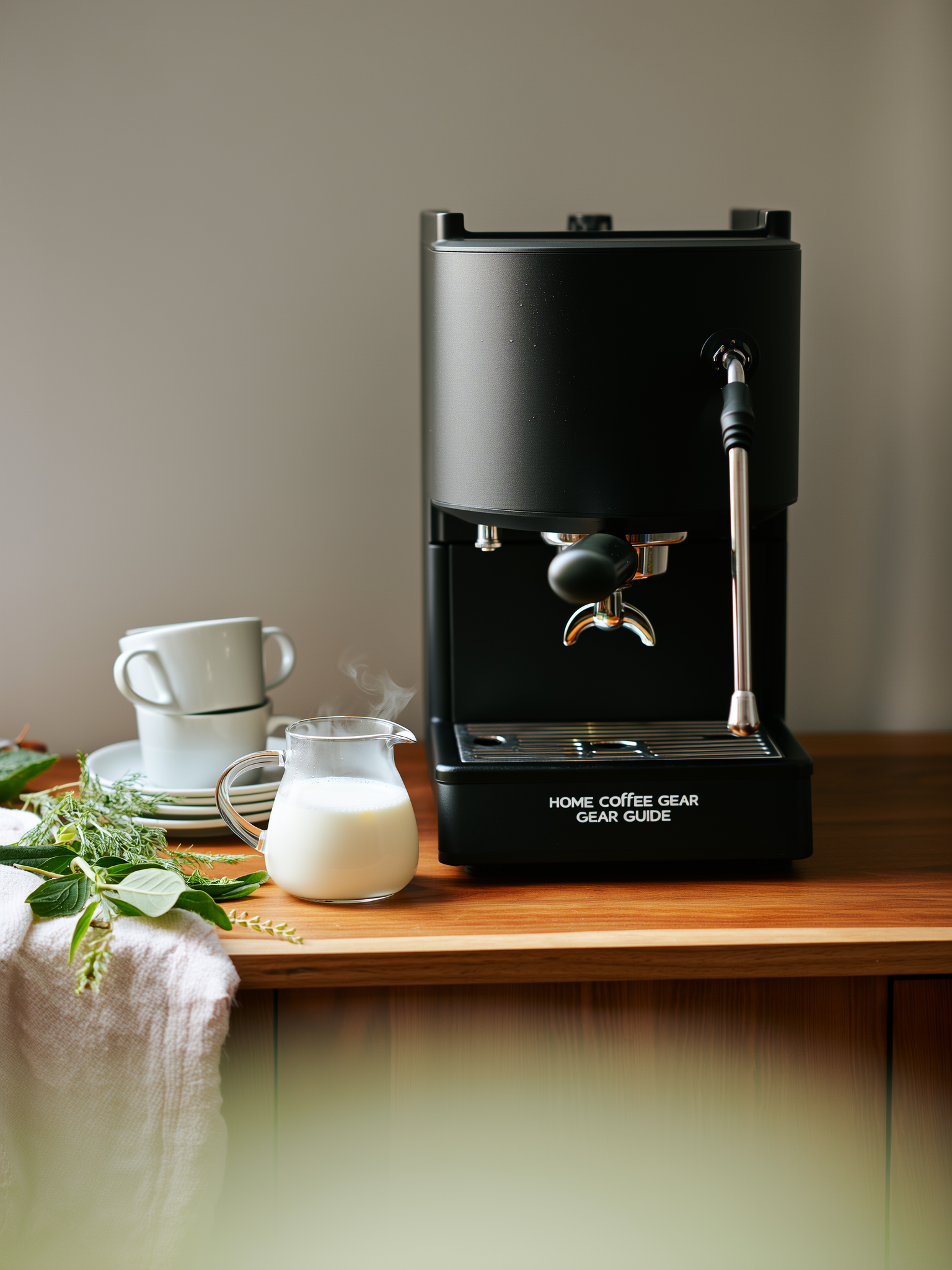
Espresso machines dominate. Compact semi-automatics that fit on a home counter and don’t require professional plumbing are the sweet spot. Machines that look good on camera — clean lines, visible portafilter, satisfying lever or button — perform especially well because they’re inherently visual.
Burr grinders are a close second. Once creators started explaining that a good grinder matters more than an expensive machine, grinder content took off. Viewers who were about to buy a blade grinder watched those videos and changed their minds.
Milk frothers and steam wand accessories drive a surprising amount of beginner engagement. Latte art is visually spectacular, and even small successes — a wobbly heart poured on a flat white — are extremely shareable. Handheld electric frothers Zulay Kitchen Milk Boss Frother became an entry point for people not yet ready to invest in a full machine.
Portable espresso makers like the Wacaco Nanopresso Wacaco Nanopresso Portable Espresso Maker also found a TikTok audience, particularly in travel and outdoor content. Camping espresso videos consistently pull strong engagement.
The throughline: all of this gear is photogenic, moderately affordable, and produces visible, shareable results.
Coffee as Self-Care: The Lifestyle Dimension
The home barista trend didn’t grow in isolation. It rode alongside a broader wellness and intentionality movement that asks: what does your morning routine actually look like?
Creators frame their brewing rituals as deliberate acts of self-care — a counterpoint to doomscrolling and digital overload. The ritual of grinding beans, heating water to the right temperature, and carefully pulling a shot requires your full attention for five minutes. In a fragmented attention economy, that focus feels genuinely restorative.
This framing resonates especially with the 25–40 demographic that’s driving much of TikTok’s growth among older users. They’re not just watching coffee videos for product information. They’re watching because the ritual itself looks calming and intentional.
You’ll see this language everywhere in home barista content: “slow mornings,” “mindful brewing,” “my little anchor before the day starts.” It’s sincere — and it’s effective at building loyal audiences because it taps into something people actually want, not just a product they might buy.
Seasonal Rhythms Keep the Content Cycle Going
One reason the home barista trend hasn’t peaked and collapsed — the way some TikTok trends do — is that it has natural seasonal renewal built in.
Summer brings a wave of iced espresso content. Shaken espresso, Japanese-style iced pour-overs, cold brew concentrate ratios — these formats refresh the audience and give creators new hooks. The viral “TikTok iced coffee” moment a couple of years back (brown sugar oat milk shaken espresso) proved that a single drink recipe could generate millions of videos from creators replicating and riffing on the original.
Winter pivots to warm, microfoam-heavy drinks: cappuccinos, flat whites, cortados, and the occasional Vienna coffee topped with heavy cream. Gift-worthy gear roundups drive holiday traffic, and “cozy morning routine” content performs extremely well from October through December.
This seasonal rhythm creates a predictable content calendar that experienced creators exploit deliberately. It also means that trend-watching in coffee content is best done with a seasonal lens — what’s rising in June looks different from what’s rising in November.
Community and Competition: The Engine Underneath
Beyond aesthetics and lifestyle appeal, there’s a competitive social layer driving engagement that’s easy to overlook.
Home barista TikTok has developed its own vocabulary of friendly competition. Latte art comparisons, “rate my setup” videos, gear flex posts, espresso dial-in troubleshooting threads in the comments — these create participatory moments that keep viewers coming back.
Hashtag challenges like #mysetup and #homecoffeegoals function as low-friction participation invitations. Watching someone else’s setup makes you want to share your own. That participatory loop generates fresh content continuously — it’s not dependent on any single creator sustaining output.
There’s also a genuine knowledge-sharing culture embedded in the community. Creators who explain why something works — why grind size affects extraction, why water temperature matters, why a bottomless portafilter shows you shot quality — build credibility quickly. The comment sections on these explanatory videos are often more useful than many dedicated forums, because the barrier to engagement is so low.
What This Means for Home Coffee Gear Enthusiasts
If you’re watching this trend as a home coffee enthusiast — or thinking about starting your own setup — a few things are worth taking away.
The gear that performs well on TikTok tends to also perform well as a practical beginner purchase. That’s not a coincidence. Creators have strong incentives to recommend things that work well and photograph well, because their content quality depends on it. Viral gear recommendations, filtered through genuine use, are often better than spec-sheet comparisons alone.
The community is genuinely welcoming to beginners right now. The accessibility narrative isn’t just marketing — the comment culture on most home barista content actively encourages people who are just starting out. Questions get answered, mistakes get normalized, and progress gets celebrated.
And the trend shows no sign of fading. As long as people are looking for tactile, offline rituals that produce visible, shareable results, home espresso and specialty brewing will remain a strong content category. New gear launches, new drink formats, and seasonal cycles all give creators fresh material to work with indefinitely.
The Bottom Line
TikTok didn’t create the home barista movement — specialty coffee culture was already building for years before short-form video arrived. But TikTok dramatically accelerated it by making craft coffee visual, accessible, and communal at a scale no other platform managed.
The result is a genuinely engaged audience that’s actively learning, actively purchasing, and actively sharing. For anyone interested in home coffee gear, that community is worth paying attention to — not just as a source of product trends, but as a window into how coffee culture is actually evolving in real kitchens, one pull at a time.
Interested in the gear showing up in these videos? Check out our beginner espresso machine roundups and grinder comparisons for a closer look at what’s worth your money.