TL;DR
- Phin brewing is a 3–5 minute gravity-based method using a simple metal filter that produces thick-bodied, naturally sweet coffee.
- Essential gear: the phin chamber, perforated disc insert, and cap. Stainless steel phins offer better heat retention than aluminum.
- Vietnamese robusta beans are traditional; their bold, earthy profile and higher body suit phin extraction better than lighter arabicas.
Vietnamese Phin Coffee Routine Explained: The Slow Drip Method Worth Waking Up For
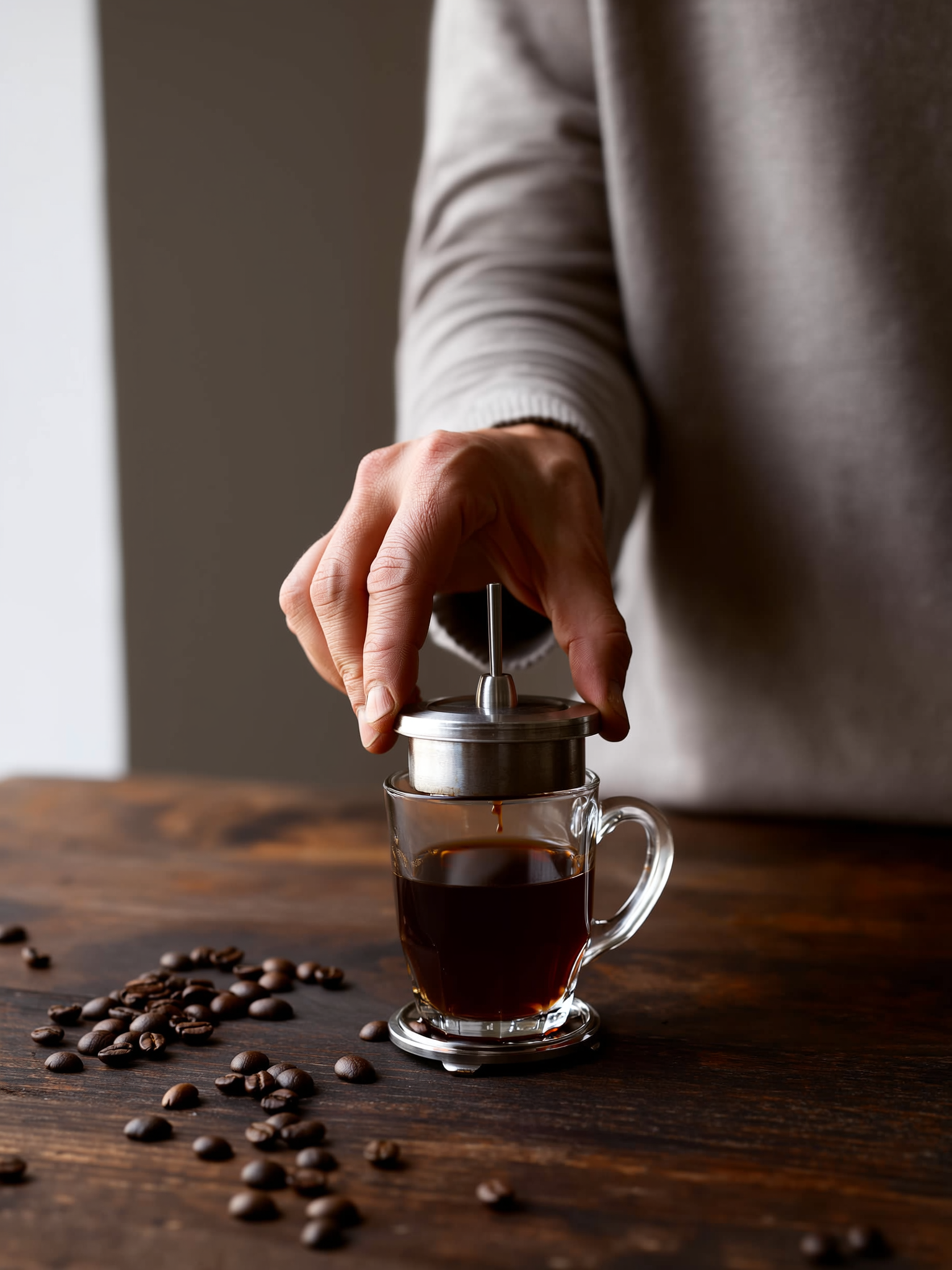
If you’ve ever watched coffee drip slowly through a small metal filter balanced on top of a glass, you’ve seen the phin in action. It looks almost too simple. And yet, that modest little device produces one of the most satisfying cups you can make at home.
The Vietnamese phin brewing method has been around for well over a century, but lately it’s catching the attention of home baristas who want something different — a brew that’s richer than pour-over, more accessible than espresso, and steeped in genuine coffee culture. If you’re curious about adding phin coffee to your morning rotation, this guide walks you through everything from gear to grind to the first sip.
What Makes Phin Brewing Special
Most brewing methods either rush the process (espresso) or require a fair bit of gear and technique (pour-over, Aeropress). The phin does neither. It’s an unhurried, almost meditative approach to coffee — you set it up, pour your water, and let gravity do the work over three to five minutes.
That slow extraction produces coffee with a distinctive character: thick-bodied, naturally sweet, and intensely flavorful without tasting harsh. There’s no paper filter stripping out oils, so what ends up in your cup is the full expression of the bean.
It’s also a beautiful ritual to weave into your day. More on that later.
Understanding the Phin Filter: Your Essential Gear
The phin is a deceptively simple device made up of three components:
- The chamber — a small cylindrical cup that sits on top of your glass or mug and holds the coffee grounds
- The perforated disc (insert plate) — pressed down lightly over the grounds to help water distribute evenly and slow the drip
- The cap — a lid that sits on top of the chamber to retain heat while the coffee drips
That’s it. No moving parts, no electronics, no disposable filters.
Phins typically brew one to two cups per session, holding around 150–180ml of water. The compact size makes them excellent travel companions — I’ve packed mine in a carry-on more than once.
Stainless steel vs. aluminum: Stainless steel phins stainless steel Vietnamese phin coffee filter hold heat better and tend to last longer. Aluminum options are lighter and often cheaper, but they can compromise heat retention in cooler kitchens. For everyday home use, stainless steel is worth the small price difference.
Choosing the Right Vietnamese Coffee Beans
This is where phin brewing gets interesting — and where a lot of new home baristas get it slightly wrong.
Traditional Vietnamese coffee culture leans heavily on robusta beans, often from Vietnam’s Central Highlands — specifically regions like Dak Lak and Lâm Đồng. Robusta has a naturally bolder, earthier flavor profile with more body and a touch of bitterness compared to arabica. It also carries more caffeine, which is part of why Vietnamese coffee hits differently.
These beans are almost always roasted dark, sometimes with added butter or cocoa during the roasting process (a traditional technique that gives Vietnamese coffee its signature richness). If you can find a Vietnamese coffee blend labeled as robusta or a dark roast from a Vietnamese brand, that’s your best starting point.
That said, you’re not locked into tradition. Single-origin arabica from Vietnam’s highlands can offer a lovely, slightly fruitier experience through the phin. Experiment once you’ve got the basics down.
Getting the grind right: This is critical. You want a medium-fine grind — finer than you’d use for a pour-over, but noticeably coarser than espresso. Think somewhere between table salt and fine sand. Too fine, and the water won’t drip through. Too coarse, and the coffee will taste thin and watery.
If you’re grinding at home, dial in your burr grinder burr coffee grinder and test a small batch before committing to your full dose.
Step-by-Step Phin Brewing Routine
Once you’ve got your gear and beans sorted, the actual brewing process is straightforward. Here’s the routine I follow every morning:
What you need:
– Phin filter
– 15–20g of medium-fine ground coffee
– 150–180ml of hot water (195–205°F / 90–96°C)
– Your cup or glass
Step 1: Warm everything up.
Pour a small amount of hot water into your cup to warm it, and briefly rinse the phin chamber. This keeps your coffee hot longer, especially if you’re drinking black.
Step 2: Add your grounds.
Place the phin on top of your cup. Add 15–20g of ground coffee into the chamber (start with 17g if you’re unsure). Give it a gentle shake to level the grounds.
Step 3: Set the perforated disc.
Press the disc down gently and evenly over the grounds. Don’t press too hard — you want it resting on the grounds, not compacting them like espresso. A slight, even pressure is all you need.
Step 4: Bloom the grounds.
Pour a small amount of hot water — just enough to wet the grounds, maybe 30ml — and wait 5–10 seconds. You’ll see the coffee bloom slightly. This releases CO₂ from the grounds and primes them for extraction.
Step 5: Fill the chamber.
Pour the remaining hot water slowly and steadily, filling the chamber to just below the rim. Place the cap on top.
Step 6: Wait.
This is the part that trips up impatient brewers. Walk away. The coffee will drip through slowly over the next 3–5 minutes. If it’s dripping in under 2 minutes, your grind is too coarse. Over 6–7 minutes, it’s too fine. Adjust your next batch accordingly.
Step 7: Lift and enjoy.
Once the dripping stops, remove the phin. Your coffee is ready.
Hot and Cold: The Two Classic Vietnamese Variations
One of the joys of phin coffee is how naturally it adapts to two very different drinks.
Cà Phê Đen (Black Coffee)
Served hot, straight from the phin into a ceramic cup — this is coffee at its most direct. The flavor is bold, slightly chocolatey, and deeply satisfying. In warmer weather, pour it over a tall glass of ice and let it melt slightly for a chilled, concentrated iced coffee that’s more flavorful than cold brew diluted with water.
Cà Phê Sữa (Coffee with Condensed Milk)
This is the Vietnamese classic that’s captured attention well beyond Southeast Asia. Before brewing, add one to two tablespoons of sweetened condensed milk to the bottom of your glass. Let the phin drip directly onto it, then stir and drink hot — or add ice for Cà Phê Sữa Đá, Vietnam’s legendary iced coffee.
The condensed milk does something remarkable with robusta’s natural bitterness. Instead of clashing, they balance: the milk adds creamy sweetness, and the robusta cuts through so the drink never tastes cloying. It’s one of those flavor combinations that sounds simple but is genuinely greater than the sum of its parts.
Phin vs. Other Brewing Methods: Why Bother?
Fair question. You might already have a pour-over setup or a French press. Why add a phin?
Vs. Pour-over: Pour-over gives you clarity and brightness, especially with light roasts. The phin gives you body and richness. They’re not competing — they’re just different conversations with the same bean.
Vs. French press: Both are immersion-adjacent methods, but the phin is cleaner to use and easier to clean. No plunger, no sediment in the cup, no mesh basket getting clogged.
Vs. Espresso machines: Espresso machines home espresso machine deliver concentrated coffee through pressure — a fundamentally different mechanism. The phin can’t replicate espresso’s crema or intensity, but it also doesn’t require hundreds of dollars of equipment or a steep learning curve. For a rich, concentrated cup without the investment, the phin is genuinely hard to beat.
The ritual factor: There’s something specific about watching coffee drip slowly into your cup that invites you to slow down with it. For people who find the morning rush counterproductive, the phin’s enforced patience becomes a feature, not a bug.
Troubleshooting Common Phin Problems
The phin is forgiving, but a few common issues show up for new brewers:
Coffee drips too slowly (or stops completely)
Your grind is too fine. Adjust one or two notches coarser on your grinder and try again. Also check that the perforated disc isn’t pressed down too firmly.
Coffee tastes thin and watery
Opposite problem — the grind is too coarse and water is passing through without extracting enough flavor. Go slightly finer, and make sure you’re using enough coffee (don’t go below 15g for a standard phin).
Coffee tastes bitter or harsh
Check your water temperature. Water above 205°F (96°C) can over-extract dark roasts, especially robusta. Let your kettle sit for 30 seconds after boiling before pouring.
Uneven drip pattern
This usually means the grounds aren’t level or the disc is tilted. When you add grounds, give the chamber a gentle tap to level them before placing the disc. When pouring, use a slow, circular motion to distribute water evenly across the surface.
Building Your Daily Phin Routine
The real payoff of phin brewing isn’t any single perfect cup — it’s the routine you build around it.
Start simple: pick a quality Vietnamese dark roast (or a robusta blend), nail down your grind size with a few test brews, and settle on whether you prefer black or with condensed milk. Once those variables are stable, the rest falls into place naturally.
Water temperature consistency matters more than most people realize. Aim for 195–205°F (90–96°C) every time, and you’ll eliminate a major source of variation. A simple gooseneck kettle with temperature control gooseneck electric kettle with temperature control makes this effortless.
From there, small adjustments — a slightly finer grind on a cold day, an extra gram of coffee on mornings when you need more — become intuitive. The phin rewards repetition. The more you brew, the more you understand what it’s telling you.
Whether you build it into your morning before work or treat it as a slow afternoon break, the phin offers something genuinely rare in modern coffee culture: a method that asks you to be present for a few minutes while something good happens quietly in front of you.
That’s worth waking up for.