TL;DR
- Dalgona coffee went viral in early 2020 due to timing (lockdowns), visual appeal, and impressive-looking simplicity.
- The drink requires only instant coffee, sugar, hot water, and milk—no equipment needed, making it accessible.
- It persists today because it's genuinely tasty, fun to make, and became part of home barista culture beyond the algorithm.
Why Dalgona Coffee Went Viral (And Why People Still Make It)
There are viral food trends that vanish as fast as they appear — the forgotten cake in a mug, the one-pan pasta everyone made once and never returned to. Then there’s Dalgona coffee.
In early 2020, this whipped coffee drink swept across TikTok and Instagram with a speed that felt almost impossible. Within weeks, people in Seoul, São Paulo, Sydney, and everywhere in between were standing over their kitchen counters, whisking furiously and posting the results. And unlike most viral food moments, Dalgona didn’t just disappear when the algorithm moved on.
So what made it stick? The answer has more to do with human psychology — and genuinely good taste — than you might expect.
What Is Dalgona Coffee? A Quick Origin Story
Before TikTok ever got hold of it, Dalgona coffee already had a quiet history.
The drink takes its name from dalgona, a beloved Korean street candy made from melted sugar and baking soda that puffs up into a light, honeycomb-like texture. The whipped coffee topping has a similar airy, caramel-toned quality — which is where the name came from when the drink gained traction in Korea.
The actual recipe couldn’t be simpler:
- Equal parts instant coffee, sugar, and hot water (typically 2 tablespoons each)
- Whipped vigorously by hand or with a hand mixer until the mixture transforms into a thick, glossy, mousse-like foam
- Spooned over a glass of hot or cold milk
That’s it. No espresso machine. No fancy pour-over setup. No grinder or filters. Just a bowl, a whisk, and about five minutes of effort.
(Want to try it yourself? Check out our step-by-step Dalgona recipe in the Routines section for exact ratios and tips on getting that perfect stiff-peak foam.)
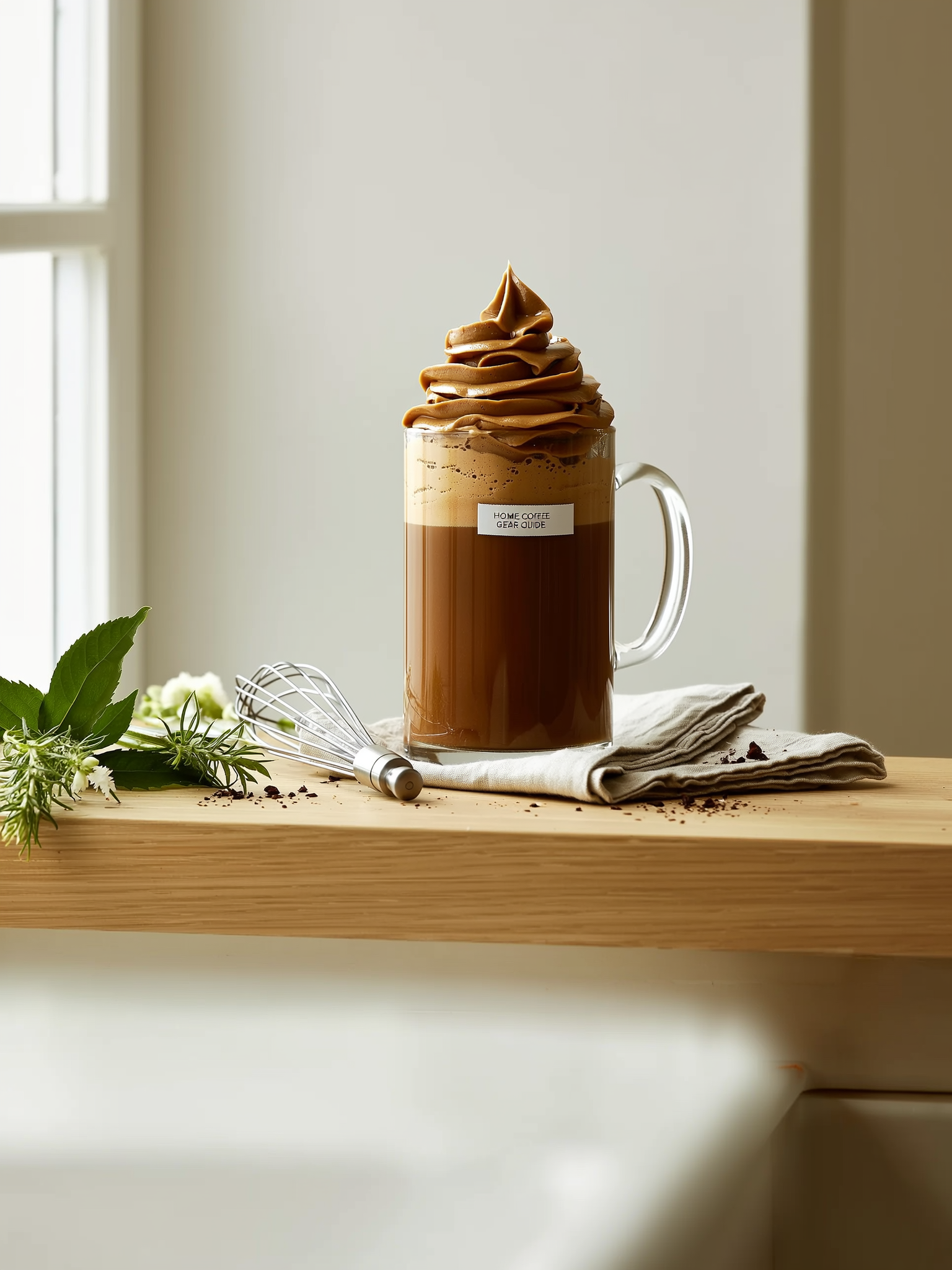
The visual result is striking — a dark, caramel-colored cloud of foam sitting on top of stark white milk. It looks like something a barista spent considerable time on. In reality, anyone can make it on a Tuesday morning before work.
That gap between how impressive it looks and how simple it actually is? That’s a big part of what made Dalgona coffee explode.
The 2020 Viral Peak: Why TikTok and Instagram Lost Their Minds Over It
Timing matters enormously when it comes to viral trends, and Dalgona coffee arrived at a genuinely extraordinary moment.
In late February and early March 2020, much of the world was entering lockdown. People were stuck at home, coffee shops were closed, and social media feeds were hungry for something — anything — that felt light, creative, and fun.
Dalgona coffee checked every single box.
The visual appeal was undeniable. The process of watching instant coffee, sugar, and water transform from a thin liquid into a thick, billowing foam is genuinely satisfying to watch. It’s the kind of sensory payoff that performs incredibly well on short-form video. The whipping motion, the gradual thickening, the final spoon-over-milk reveal — each step is filmable, shareable, and almost hypnotic. There’s a reason ASMR and food transformation content dominate watch-time metrics.
Pandemic boredom created the perfect audience. When your usual coffee routine is just pressing a button on a machine or stopping at the same café every morning, lockdown stripped away small daily rituals. Dalgona gave people a new ritual — a tactile, hands-on process that felt creative without being complicated. It gave people something to do.
Celebrities and major creators amplified it fast. Once a few high-follower accounts documented their attempts, the FOMO effect kicked in immediately. Millions of people saw the videos and thought, I have instant coffee in my cabinet. I could do this right now. And they did. That low barrier to entry — no specialized equipment, ingredients most households already owned — meant the recipe spread faster than any trend requiring a grocery run.
The failure content was just as shareable. Half-whisked coffee. Frothy disasters. Attempts that didn’t stiffen properly. The fact that there was a skill element (whisking long enough, using the right coffee-to-sugar ratio) meant people documented their failures just as enthusiastically as their successes. That created a feedback loop of content that kept the trend alive for weeks longer than it might have otherwise lasted.
Why Dalgona Coffee Stayed (Unlike Most Viral Food Trends)
Here’s where Dalgona coffee separates itself from the rest of the viral food graveyard.
It actually tastes good. This sounds obvious, but it genuinely isn’t guaranteed with viral food trends. Some survive purely on visual novelty and don’t hold up once you’ve tasted them. Dalgona coffee delivers — the whipping process aerates the coffee and sugar into something creamy and intensely flavored that slowly dissolves into the milk as you drink, creating a naturally layered flavor experience. The bitterness of the coffee balances the sweetness of the foam. The texture is genuinely pleasant.
It’s endlessly customizable. Once you understand the base recipe, you can start experimenting:
- Swap regular milk for oat, almond, or coconut milk
- Adjust the sweetness by reducing sugar
- Dust the top with cinnamon, cocoa powder, or matcha
- Add a splash of vanilla extract to the foam
- Try it over ice in summer, or with warmed milk in winter
This remix-ability is crucial. Trends that are locked into one exact preparation fade quickly because people get bored. Dalgona has a core method that stays consistent while the variations keep it fresh.
It introduced people to something culturally meaningful. For many global audiences, Dalgona coffee was a first introduction to Korean food and beverage culture — and that curiosity didn’t stop at the drink. It opened doors to wider interest in Korean cuisine, café culture, and the broader Korean Wave that was already building momentum. That cultural resonance gave it depth that a purely novelty-driven trend doesn’t have.
It requires just enough effort to feel rewarding. There’s something meditative about the whisking process. It’s not quick — doing it by hand takes several minutes of continuous effort — and that investment makes the finished drink feel more satisfying. It became a small daily ritual for people who found comfort in process during an uncertain time.
Modern Dalgona: Where It Lives Today
Dalgona coffee didn’t disappear when lockdowns ended. It evolved.
Specialty coffee shops in Seoul, New York, London, and beyond now offer whipped coffee variations as permanent or rotating menu items. What started as a home kitchen trend became a legitimate café offering — adapted with higher-quality instant espresso powders, alternative milks, and creative toppings.
At home, the experimentation has gotten more interesting:
- Different instant coffees change the flavor profile significantly. A higher-quality freeze-dried instant delivers a cleaner foam than cheaper granule-based options.
- Cold versions with plenty of ice have become a summer staple, sitting naturally alongside cold brew and iced latte culture.
- Seasonal spins keep it relevant — pumpkin spice Dalgona in autumn, peppermint cocoa versions in December, a lighter jasmine-tea foam variation in spring.
(Looking for your next iced coffee project? Check out our guide to cold brew basics — a great companion to your Dalgona repertoire when the weather warms up.)
On social media, Dalgona coffee remains a reliable go-to for home barista content creators. It’s visually compelling, reproducible, and genuinely photogenic. It also ages well — a video filmed today looks just as satisfying as one from 2020, because the recipe doesn’t reference anything time-specific.
Dalgona vs. Other Viral Coffee Trends: What Made It Different
Think about other coffee trends that surged and faded: Bulletproof butter coffee, single-origin pour-over gatekeeper culture, even the brief moment when everyone was obsessed with mushroom coffee. Most of these required either expensive gear, hard-to-find ingredients, or a level of commitment that casual coffee drinkers couldn’t sustain.
Dalgona asked nothing of you except a whisk and five minutes.
Simplicity and repeatability are the twin engines of longevity. One-trick viral trends fade because once you’ve seen the trick, there’s nothing left to discover. Dalgona is a base — a technique, really — that invites reinvention. That’s the same reason a good pour-over recipe stays relevant: the core method holds, but you can spend years dialing in your variables.
The ASMR and process appeal gave it staying power beyond taste. Whisking coffee foam by hand is tactile and rhythmic in a way that feels satisfying independent of the result. It became content in itself — the process video, not just the finished product. That’s a rarer quality in food trends than you might think.
It became a gateway, not a dead end. Many Dalgona converts went on to explore broader coffee curiosity: different roast profiles, other brewing methods, more sophisticated gear. The drink served as an accessible entry point into a hobby that can go as deep as you want it to.
The Staying Power of Approachable Coffee Culture
Dalgona coffee proved something genuinely interesting about how we relate to food trends in the social media era.
It wasn’t just a moment. It was a reminder that the most durable trends share a few consistent qualities: they’re accessible to nearly anyone, they deliver genuine sensory satisfaction, they’re visually compelling without being pretentious, and they carry some cultural meaning beyond pure novelty.
The fact that a Korean street candy inspired a globally beloved home coffee ritual — one that’s still being made, filmed, and remixed years later — says something hopeful about what connects people across very different backgrounds. Sometimes all it takes is a bowl, a whisk, and two tablespoons of instant coffee.
If you haven’t made Dalgona coffee yet (or haven’t made it in a while), now’s a great time to revisit it. Head over to our step-by-step Dalgona recipe in the Routines section, try a variation you haven’t before, and let us know in the comments what twist you’re working with. The trend may have peaked in 2020, but the drink itself has plenty of life left.