TL;DR
- Minimalist coffee setups prioritize quality over quantity: grinder, brewer, kettle, scale.
- 83% of coffee drinkers now brew at home, fueling a shift away from gadget clutter.
- Core gear includes a burr grinder, single brewer, gooseneck kettle, and digital scale only.
The Minimalist Coffee Setup Trend: Why Home Baristas Are Choosing Less
There’s a quiet shift happening on kitchen counters everywhere.
Where once espresso machines, pod brewers, milk frothers, and specialized gadgets competed for space, more home brewers are clearing the decks. What remains is intentional: a grinder, a brewer, a kettle, and a scale. That’s it.
The minimalist coffee setup trend is gaining real momentum — and it’s not just about tidiness. It reflects something deeper about how people want to experience their morning cup.
Why Less Is More in Home Coffee Right Now
Home brewing is more popular than ever. According to recent data, 83% of past-day coffee drinkers brewed at home in 2024, up 4% since 2020. With so many people investing in their home coffee routine, it was only a matter of time before the pendulum swung back from gear accumulation toward something more considered.
The specialty coffee community has long celebrated equipment upgrades. But a growing number of enthusiasts are pushing back. The question isn’t “how much gear do you have?” anymore. It’s “do you actually need all of it?”
Minimalism in coffee isn’t about settling for less. It’s about choosing quality so deliberately that nothing extra earns a spot on your counter.
What Actually Defines a Minimalist Coffee Setup
There’s no strict rulebook here, but the philosophy is consistent: keep only what you use, and make sure what you keep is excellent.
In practice, a minimalist coffee station typically includes:
- A burr grinder — manual or compact electric, but always consistent
- One brewer — pour-over cone, French press, or AeroPress AeroPress Coffee Maker
- A gooseneck kettle — for precise pouring control
- A small digital scale — for repeatable results
- Two or three favorite mugs — not a cabinet full
That’s the core kit. Everything else is optional.
Aesthetics matter too. Clean lines, neutral tones, and compact footprints aren’t just Instagram-friendly — they create a calming workspace that supports a more mindful morning routine. Materials like stainless steel and glass are popular choices because they look timeless, produce a cleaner cup, and outlast cheaper plastic alternatives.
The Core Tools a Minimalist Home Barista Actually Needs
A Single, Quality Burr Grinder
Fresh grinding is non-negotiable if you care about flavor. The minimalist approach skips owning different grinders for different brew methods and instead invests in one reliable burr grinder that handles everything — pour-over, French press, AeroPress — without compromise.
A growing movement among home baristas is moving away from grinders with flashy screens and app connectivity in favor of machines that prioritize consistency, reliability, and taste. Fewer features, better grind.
For counter-conscious setups, hand grinders deserve serious consideration. They’re compact, quiet, and surprisingly meditative.
One Brewer That Does the Job Well
The three brew methods that dominate minimalist setups are pour-over, French press, and AeroPress — for good reason.
- Pour-over (Melitta, Chemex Chemex 6-Cup Pour-Over Coffee Maker, or a simple V60) highlights the clarity and nuanced flavors of the bean with nothing extra required
- French press delivers bold, full-bodied cups through an almost entirely equipment-free process — press and pour
- AeroPress offers surprising versatility in a device that fits in your palm and weighs almost nothing
Each method requires minimal gear, produces excellent coffee, and doesn’t demand electricity, complicated maintenance, or dedicated counter space.
A Gooseneck Kettle
One precise kettle replaces both a stovetop setup and any need for a secondary thermometer. A good gooseneck gives you control over pour rate and water placement — both of which genuinely affect extraction quality.
You don’t need digital temperature displays or programmable presets. A simple kettle that holds temperature reasonably well and pours accurately is enough for most minimalist setups.
Why This Trend Is Resonating Right Now
Pushback Against Gear Obsession
Coffee culture online can feel like an arms race. There’s always a newer grinder, a smarter machine, a technique you haven’t tried. For many enthusiasts, that constant cycle of acquisition became exhausting rather than exciting.
The minimalist turn is, in part, a reaction to that. Reducing decision fatigue means fewer options to manage — which paradoxically creates more space to actually enjoy the coffee. When your setup is simple and dialed in, you’re not troubleshooting. You’re just brewing.
The Mindfulness Connection
A minimalist coffee routine naturally supports a more mindful morning. The core philosophy isn’t just about what tools you own; it’s about how fully you engage with the process.
Minimalist coffee drinking involves slowing down and engaging all your senses — the sound of water hitting grounds, the bloom, the aroma, the color of the brew as it drops. That level of presence is much harder to access when you’re managing multiple appliances and a phone app.
Hand-grinding your coffee before a pour-over, for example, is a small ritual that many minimalist brewers describe as almost meditative. It’s not the fastest option. That’s partly the point.
Sustainability as a Driving Motivation
Buying fewer, better things is inherently more sustainable — and this resonates strongly with coffee drinkers who care about their environmental footprint.
A minimalist setup means fewer plastic components, less electronic waste, and longer ownership cycles. Choosing brewers and grinders built with repairable parts extends their useful life significantly. A well-maintained hand grinder or pour-over kettle can last a decade with basic care.
The Aesthetic Appeal Is Real
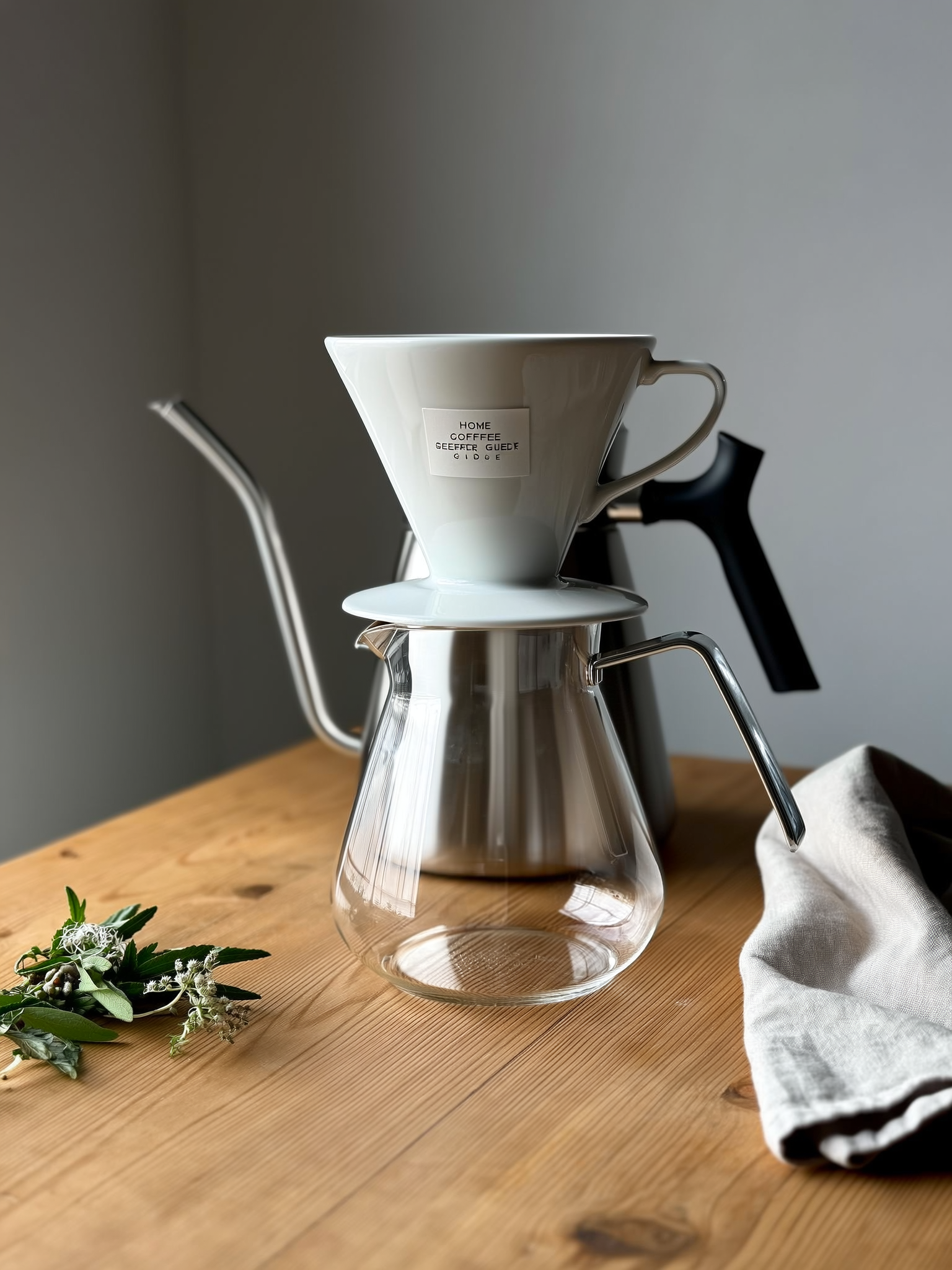
Uncluttered kitchen aesthetics spread fast on Pinterest and Instagram. A clean countertop with a matte-black gooseneck kettle, a Chemex, and a small wooden tray photographs beautifully — and that visibility has introduced the philosophy to people who might not have otherwise sought it out.
The visual appeal isn’t shallow. A space that looks calm often feels calm to work in, and for something as routine-driven as your morning coffee, that matters.
How to Actually Transition to a Minimalist Coffee Routine
You don’t need to throw everything out and start from scratch. Transition works better as a gradual audit.
Step 1: Inventory what you actually use
Look at your coffee gear with fresh eyes. What do you reach for every day? What’s been on the shelf untouched for three months? Be honest. If a piece of equipment only gets used occasionally and doesn’t significantly improve your cup, it’s a candidate for rehoming.
Step 2: Identify gaps, then fill them intentionally
Maybe you’ve been getting by with a blade grinder and you’re curious about burr grinding. Don’t buy five things at once — invest in one quality upgrade at a time and learn it properly before adding anything else.
Step 3: Choose gear with longevity in mind
When you’re buying fewer items but better ones, longevity matters. Look for products with:
- Replaceable burrs or filters
- Durable materials (stainless steel, ceramic, borosilicate glass)
- Minimal electronics that can fail
- Strong customer service and parts availability
Step 4: Edit your mug collection
This sounds small but it isn’t. Keeping two or three mugs you genuinely love versus a cabinet full of options is part of the same philosophy. The items you interact with most should earn their place.
Making Minimalism Work for Your Budget and Lifestyle
One of the pleasant surprises of the minimalist approach: it often costs less in the long run.
Fewer items means less total spend, even when individual pieces are higher quality. An $80 hand grinder and a $40 pour-over cone is a complete, capable setup for under $150. Compare that to a half-dozen gadgets purchased impulsively over time.
There are also real daily-life benefits:
- Faster morning routines — fewer things to clean, prep, and manage
- Less counter clutter — a calmer visual environment to start your day in
- Better coffee, often — because simple methods executed well typically outperform complicated methods executed inconsistently
The deeper benefit is subtler. When you choose your gear with care and use it every single day, your relationship with each piece changes. You understand it better. You notice when something’s slightly off. That kind of attention produces consistently better results over time.
Is the Minimalist Trend Right for You?
This isn’t a philosophy for everyone. If you genuinely love gear exploration and find joy in trying new brewing methods, more variety makes sense. There’s no wrong way to enjoy coffee at home.
But if your current setup feels cluttered, overwhelming, or somehow disconnected from the experience you wanted when you first got into home brewing — the minimalist approach is worth exploring.
Start with one change. Clear the counter. Use the same method for a week. See if slowing down and simplifying the ritual changes how the cup tastes.
It might surprise you.
Want to go deeper on minimalist brew methods? Check out our guides to pour-over basics for beginners and how to choose your first hand grinder for practical next steps.
Sources
- Coffee Shop Trends 2025: What’s Brewing for the Future?
- 2025 Coffee Table Trends: What’s In and What’s Out
- Home Coffee Bar Ideas: 30 Beautiful Setups for Any Space – Pro Coffee Gear
- 30 Inspiring Home Coffee Station Ideas for the Perfect Brew
- 2024 Cafe Design Trends: Modern Ideas For Coffee Shop Interiors – Barista Life
- Minimalist Coffee Table Ideas for Calm Living Rooms