TL;DR
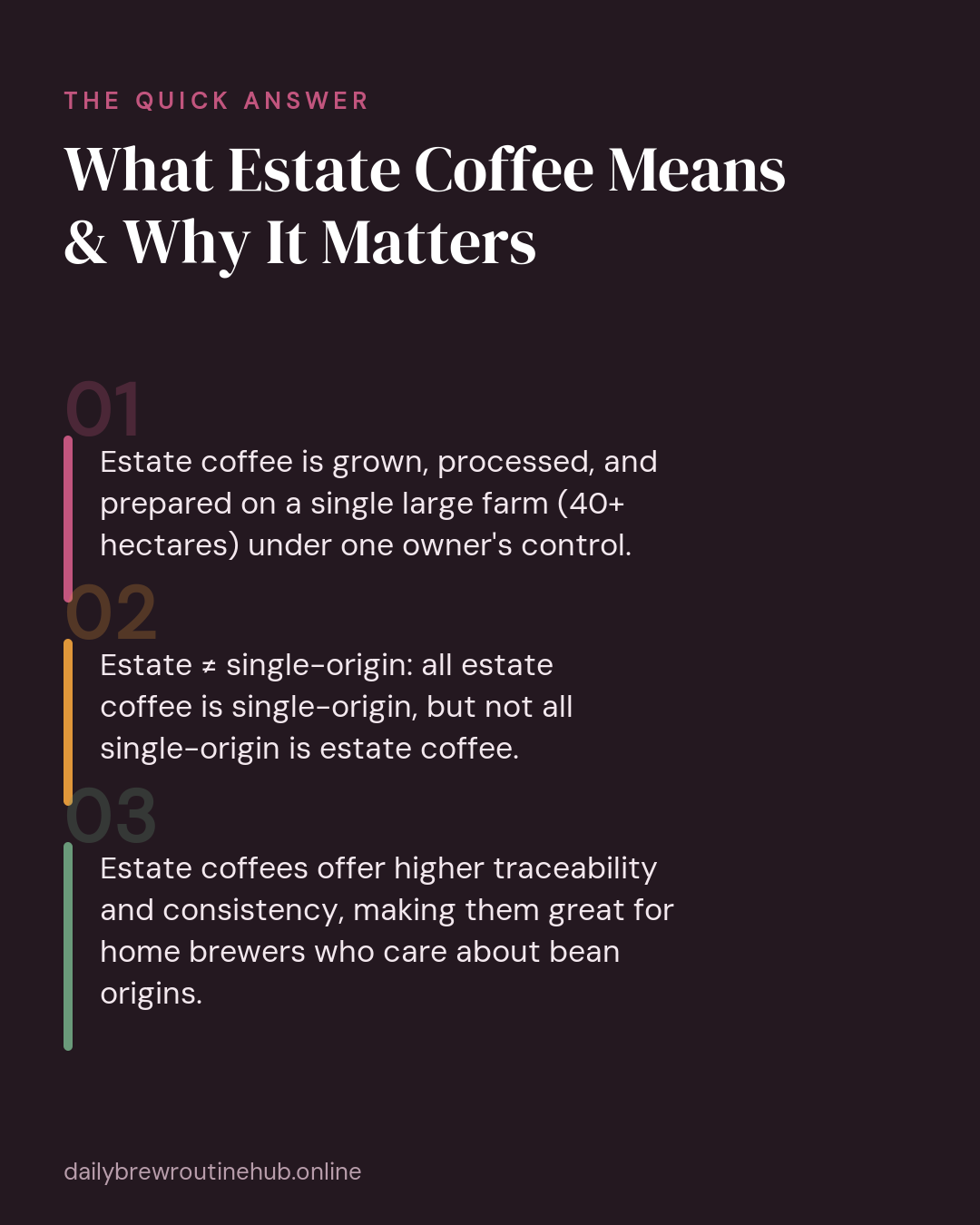
- Estate coffee is grown, processed, and prepared on a single large farm (40+ hectares) under one owner's control.
- Estate ≠ single-origin: all estate coffee is single-origin, but not all single-origin is estate coffee.
- Estate coffees offer higher traceability and consistency, making them great for home brewers who care about bean origins.
What ‘Estate Coffee’ Actually Means – And Why It Matters for Your Cup
If you’ve spent any time browsing specialty coffee bags or scrolling through a roaster’s website, you’ve probably seen the word estate stamped across the label in elegant typography. It sounds premium. It sounds intentional. But what does it actually mean — and does it guarantee a better cup?
The short answer is yes, usually. The longer answer is worth understanding, especially if you’re the kind of home brewer who cares where your beans come from and wants to get the most out of your pour-over or espresso setup.
This guide breaks down the real definition of estate coffee, how it differs from broader “single-origin” claims, and how to spot the genuine article on a coffee bag.
What Defines Estate Coffee?
Estate coffee refers to beans grown, processed, and prepared for export on a single, large farm — typically 40 hectares or more. What makes this meaningful isn’t just the size. It’s the level of control.
On a true estate, the same owner manages:
- The growing conditions (soil management, shade trees, altitude)
- The harvest (often selectively hand-picked at peak ripeness)
- The processing (washing, drying, or fermenting the cherries)
- The milling and sorting before the beans leave the property
That end-to-end ownership is called vertical integration, and it’s the core of what separates estate coffee from most other coffee you’ll find on supermarket shelves.
When a bag says “Hacienda La Minita” (a well-known estate in Costa Rica) or lists a specific farm name like “Finca El Puente,” that name signals real traceability. Someone — a family, a company, a single operation — is accountable for every decision made before those beans reached your grinder.
Estate vs. Single-Origin: They’re Not the Same Thing
This is where a lot of home brewers get understandably confused. You’ll see both terms used in specialty coffee circles, sometimes almost interchangeably. They’re not the same.
Single-origin means the coffee comes from one country or defined region. It could be Ethiopia, Colombia, or Sumatra. The coffee inside the bag might be sourced from dozens of small farms, a cooperative of hundreds of smallholders, or a regional mill that aggregates beans from various growers across the area. It’s still single-origin, but there’s a lot going on behind that label.
Estate coffee is always single-origin — it comes from one place, by definition. But the reverse isn’t true: single-origin is not always estate.
Here’s a practical way to think about it:
| Single-Origin | Estate | |
|---|---|---|
| One country/region | ✅ | ✅ |
| One specific farm | ❌ (not required) | ✅ |
| Vertically integrated | ❌ (not required) | ✅ |
| Consistent across harvests | Variable | More consistent |
| Traceability | Medium | High |
Neither is automatically better for your cup — cooperative single-origins can be spectacular — but estate coffees offer something specific: consistency rooted in controlled conditions. Because one team manages every variable, you’re more likely to taste the same character in a bag from this year as you did from last year’s harvest.
Why Estate Coffee Commands Higher Prices
When you see an estate coffee priced noticeably higher than a regional blend, there’s a real reason behind it.
Vertical integration is expensive. Owning and maintaining a processing mill, drying beds, sorting equipment, and storage facilities on top of cultivating the actual plants requires serious capital investment. Estate owners aren’t just farmers — they’re running a multi-stage operation.
Selective harvesting raises labor costs. Many estates hand-pick only ripe cherries rather than strip-picking entire branches at once. Workers may pass through the same trees multiple times across a harvest season. That approach takes more time and more people, but it means fewer underripe or overripe cherries making it into the final lot — which directly improves cup quality.
Smaller volumes mean less supply. A cooperative might aggregate coffee from 500 smallholder farmers and produce enormous quantities. An estate has a fixed number of hectares and strict quality control that filters out substandard beans. Less coffee reaching the market means the price reflects that scarcity.
Experimentation adds cost. Many forward-thinking estates actively experiment with fermentation techniques — extended anaerobic fermentation, carbonic maceration, controlled honey processing — to develop distinctive flavor profiles. These methods require infrastructure, monitoring, and often result in lower yields per batch. The cost gets passed on to the consumer, but so does the flavor.
Popular Estate Coffee Regions and Their Flavor Profiles
Estate coffees exist across all the major growing regions, but the flavor you’re chasing depends heavily on where the farm is located.
Central America
Guatemala, Honduras, and Costa Rica are home to classic hacienda-style estates — large, often family-owned farms with long histories of production. These coffees tend to be balanced and approachable: think dark chocolate, brown sugar, and mild citrus acidity. They’re excellent for espresso because the cleaner profiles work well under pressure without turning harsh.
East Africa
Ethiopian and Kenyan estates are where things get dramatically aromatic. Washed-process lots from Ethiopian estates often show jasmine, bergamot, and stone fruit — the kind of flavors that genuinely surprise people trying specialty coffee for the first time. Kenyan estate coffees frequently lean into blackcurrant and bright, winey acidity that makes them almost divisive in the best way.
South America
Colombian estates are among the most accessible entry points into estate coffee for newcomers. The profiles are typically nutty, caramel-sweet, and medium-bodied — easy to enjoy without dialing in extreme brew variables. Brazilian estates skew toward lower acidity with more nutty, chocolatey, and full-bodied character, making them popular for espresso-forward drinkers.
The region shapes the flavor, but the estate’s specific processing decisions — how long the cherries ferment, how they’re dried, which varieties are grown — create the nuance within that regional character.
How to Spot Authentic Estate Coffee on Labels
Here’s what to look for the next time you’re browsing a specialty shop or online.
Look for a specific farm name. Vague descriptors like “Colombian Highlands” or “African Blend” are red flags. An authentic estate label will name the farm directly — Finca, Hacienda, or Estate followed by a proper name. The owner’s family name often appears too, because they want credit for the work.
Check for a processing method. Washed, natural, honey, anaerobic — estates list these because the method is part of the story. If a bag just says “medium roast” with no other details, someone in the supply chain isn’t being transparent.
Look for a harvest date. Coffee is a seasonal agricultural product. Estate coffees from reputable roasters typically include the crop year or arrival date. Stale coffee — anything more than 6 to 8 months off-roast — loses the nuanced flavors you’re paying for.
Ask your roaster. Specialty roasters who source genuine estate coffees can tell you about the farm, the owner, and often why they chose that particular lot. If a roaster can’t answer basic questions about where their “estate” coffee comes from, that label is doing marketing work more than descriptive work.
Pricing is a soft signal. Estate coffee rarely comes cheap. If something’s labeled estate but priced the same as commodity blends, dig deeper before assuming it’s the real thing.
Is Estate Coffee Worth It?
For everyday brewing when you want a reliable, comforting cup, an excellent cooperative or regional single-origin works perfectly well. There’s no obligation to spend more.
But if you’re brewing with methods that reward nuance — pour-over, AeroPress, manual espresso — estate beans have a genuine advantage. Because the flavor profile is more tightly controlled from seed to bag, you’re working with a more defined target. Your dialing-in process has a clearer outcome. When you nail the right water temperature, grind size, and extraction time, the result tastes more like somewhere, not just like coffee.
Estate coffees also make excellent side-by-side comparisons if you’re building your palate. Brewing a washed Ethiopian estate next to a natural Guatemalan estate in the same week teaches you more about how processing affects flavor than almost anything else you can read.
That said, traceability and quality are what you’re actually paying for — not the word “estate” itself. A legitimate estate with strong farming and processing practices delivers real value. A bag using the word loosely? Less so.
Use the label-reading tips above to tell the difference, and when in doubt, buy from roasters who are specific about their sourcing. The details are there when someone has something genuine to say.
If you’re curious about how bean origin affects your home brewing setup, check out our guide on [washed vs. natural process coffees] and how each responds to different brew methods. Understanding the bean is half the work of dialing in a great cup.