TL;DR
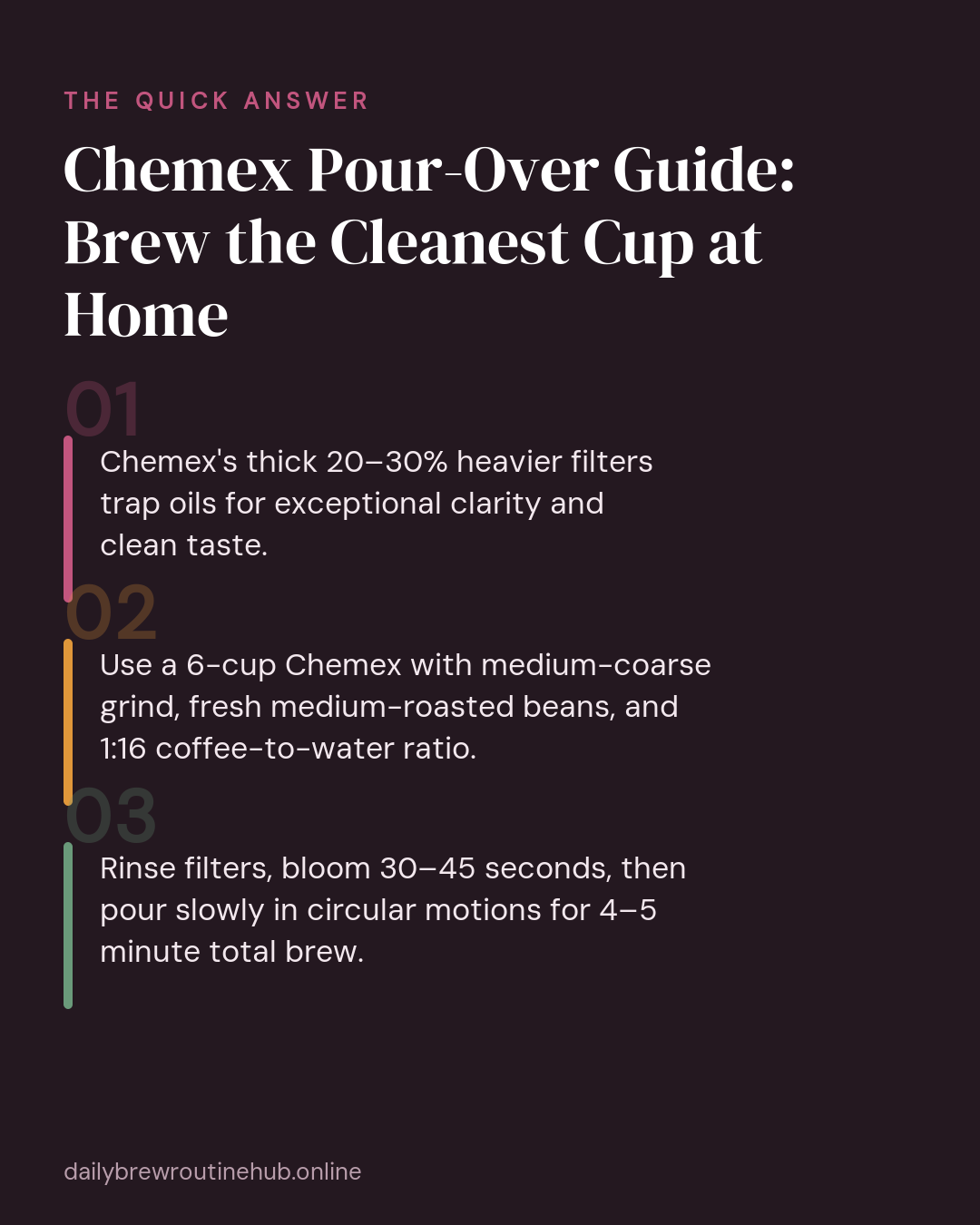
- Chemex's thick 20–30% heavier filters trap oils for exceptional clarity and clean taste.
- Use a 6-cup Chemex with medium-coarse grind, fresh medium-roasted beans, and 1:16 coffee-to-water ratio.
- Rinse filters, bloom 30–45 seconds, then pour slowly in circular motions for 4–5 minute total brew.
Chemex Routine: Step-by-Step Guide for the Cleanest Pour-Over Cup
If your pour-over coffee tastes muddy, bitter, or just off — and you can’t figure out why — the Chemex’s thick paper filter is about to become your best friend. This iconic glass brewer has been turning out some of the cleanest, clearest cups in home coffee since 1941, and with a solid routine behind it, the results are remarkable.
Here’s exactly how to get there.
Why the Chemex Produces Such a Clean Cup
The Chemex isn’t just a pretty hourglass sitting on your counter. Invented by Peter Schlumbohm in 1941, it earned a place in New York’s Museum of Modern Art and was recognized as one of the best-designed products of modern times in 1958. That recognition wasn’t just for looks.
What makes the Chemex genuinely different from other pour-over methods is its filter. Chemex filters are 20–30% heavier than standard paper filters, which means they trap more fine particles and suspended oils that can make coffee taste murky or bitter. The result is a medium-bodied cup with exceptional clarity — the kind of cup that actually lets you taste the difference between a washed Ethiopian and a natural Colombian.
That clarity is the whole point. If you’re buying good single-origin beans, the Chemex is one of the best tools for letting their flavor speak clearly.
Picking the Right Chemex and Beans
Chemex Size
Chemex brewers come in sizes ranging from 3-cup to 13-cup. For daily home brewing — whether you’re making a single large mug or a couple of cups — the 6-cup Chemex is the sweet spot. It’s roomy enough to brew 400–600ml without cramping your technique, and not so large that your coffee sits cooling while you wait to fill it.
Coffee Bean Selection
Because the Chemex highlights clarity and brightness, fresh, medium-roasted beans roasted within 2–4 weeks tend to shine best here. You’ll want enough CO₂ still present in the grounds for a proper bloom (more on that below), and medium roasts tend to have the complexity worth tasting clearly.
Darker roasts aren’t off-limits, but their lower brightness can get a little muted through the thick filter. If you do brew darker, dial down your water temperature slightly — more on that in the setup section.
Grind Size
This is one of the most important variables. For Chemex, aim for a medium-coarse grind — coarser than a standard drip brewer, but finer than what you’d use for a French press. The thick filter slows down flow naturally, so grinding too fine will stall the brew and lead to over-extraction and bitterness. Too coarse, and water rushes through before it’s done its job.
If you’re in the market for a consistent burr grinder, look for one with clear grind settings you can dial back to reliably. Baratza Encore burr grinder
Pre-Brew Setup: Water, Ratio, and Filter Rinse
Getting your setup right before you pour a single drop is what separates repeatable great cups from lucky ones.
Water Temperature
Heat your water to 195–205°F (90–96°C). If you’re working with a lighter roast, lean toward the hotter end of that range — higher temperatures help pull out the brightness and complexity from lighter beans. Darker roasts do better toward the cooler end, where the extraction softens rather than amplifies heavier notes.
If you’re using a standard kettle without a thermometer, bringing water to a boil and letting it rest for 30–45 seconds usually lands you in the right zone.
Coffee-to-Water Ratio
Start with a 1:16 ratio — that’s 25g of coffee to 400g of water for a solid single-person brew. If you want something a touch lighter or are still dialing in, some experienced home brewers prefer starting at 1:18 to avoid over-extraction while they’re getting familiar with their setup. Once you’ve run a few brews and tasted the results, you can adjust from there.
A kitchen scale makes this significantly easier and more repeatable than scooping by volume.
Rinse the Filter
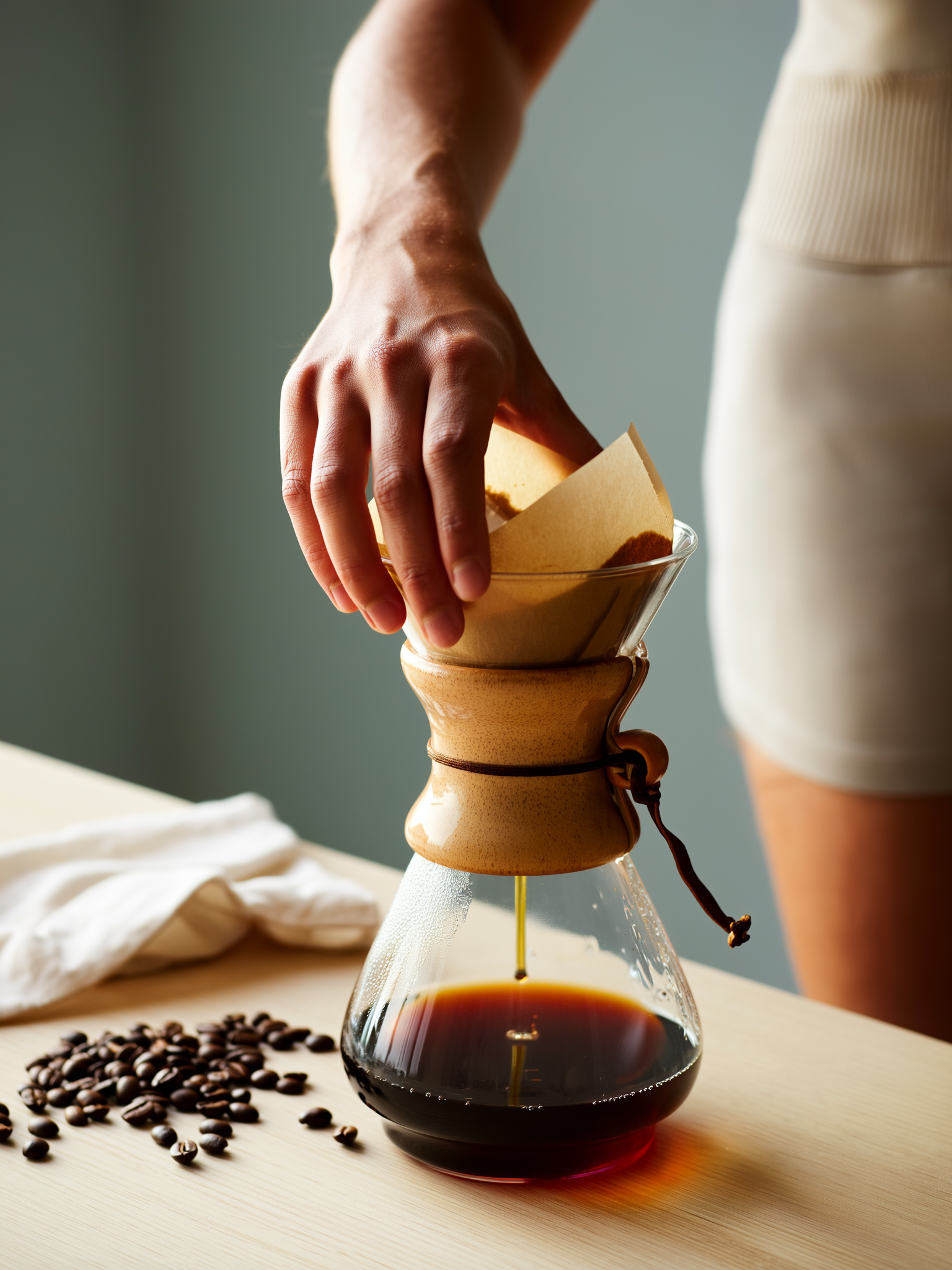
Before adding any coffee, fold the Chemex filter with the triple-layer side facing the spout, place it in the top of the brewer, and rinse it thoroughly with hot water. This does two things: it warms the glass vessel so your brew temperature stays stable, and it removes the papery taste that unrinsed Chemex filters can leave behind. Chemex filters are thick enough that this step genuinely matters.
Pour out the rinse water before adding your grounds.
The Brewing Technique: Bloom Phase and Main Pour
Step 1: Add Your Grounds and Start the Bloom
Pour your weighed, ground coffee into the rinsed filter and give the Chemex a gentle shake to level the bed. Then start your timer.
For the bloom phase, pour just enough hot water to saturate all the grounds evenly — usually about twice the weight of your coffee (so roughly 50g for a 25g dose). Pour slowly and make sure every part of the grounds gets wet.
Now wait. Allow the bloom to run for 45 seconds. If your beans are fresh, you’ll see the coffee bed rise and bubble as trapped CO₂ gases release. This is exactly what you want — fresh beans doing their job. If the bed barely moves, your beans may be stale and their flavor profile will likely be flat regardless of technique.
Step 2: Main Pour — Slow and Steady
After the bloom, begin your main pour in stages. Use a slow, circular motion, starting from the center and moving outward, then back to center. The goal is to keep the water level in the brew cone relatively steady — neither flooding it in one go nor letting the bed dry out between pours.
Keep your water stream thin and controlled, and aim it at the coffee bed rather than the filter walls. Pouring directly onto the paper can channel water through without properly saturating the grounds, leading to uneven extraction.
Total brew time from first pour to final drip should land between 4:30 and 5:30 minutes. Ethiopian coffees tend to run toward the longer end of that window, while Central and South American coffees typically finish more quickly. If your brew finishes significantly faster than 4 minutes, grind a touch finer. If it’s stalling past 6 minutes, go coarser.
Reading Your Brew As It Happens
The Chemex gives you visual feedback if you know what to look for.
- Coffee rings on the filter walls signal that water was poured too fast or too wide, causing uneven saturation. Slow your next pour down.
- A perfectly flat, evenly dark coffee bed at the end of the brew is a good sign. An uneven, lumpy, or channeled bed means your pour wasn’t consistent enough.
- Brew time tells you a lot. It’s one of the most useful adjustments you can make — treat it like a diagnostic tool, not just a waiting game.
Decanting and Tasting
Pour your brewed coffee into your cup immediately once the dripper clears. Don’t leave it sitting in the Chemex — even a few minutes of contact with the warm glass can push flavors toward over-extraction.
What you should taste: a clean, bright cup with clarity that lets subtle flavor notes come through. Floral or fruity characteristics that might get muddled through a metal filter or a French press should be clearly present here. This is especially true with washed or naturally-processed light roasts.
Take a mental note (or an actual note) of:
– Your grind setting
– Total brew time
– The ratio you used
– How the cup tastes
These four data points are all you need to dial in your next brew with precision.
Cleaning and Keeping Your Chemex in Good Shape
Cleaning the Chemex is simple, but doing it consistently matters.
After every brew:
– Discard the used filter and grounds immediately. Coffee oils left inside the brewer will go stale and affect your next cup.
– Rinse the Chemex thoroughly with hot water.
For deeper cleaning:
– The Chemex is dishwasher-safe, but hand-washing tends to extend its lifespan and prevents cloudiness from building up on the glass.
– Occasionally, a small amount of baking soda or a dedicated coffee equipment cleaner will remove any residual oil buildup from the interior.
About your filters:
– If you buy filters in bulk and store them long-term, keep them sealed in their original packaging. Paper absorbs odors, and stale or musty filters will transfer that taste directly into your brew.
Your Chemex Routine at a Glance
Here’s the full sequence in a quick-reference format:
- Grind to medium-coarse
- Heat water to 195–205°F (90–96°C)
- Fold and rinse the filter; discard rinse water
- Add grounds and level the bed
- Bloom: pour ~50g water, wait 45 seconds
- Main pour: slow circles, keeping water level steady
- Target brew time: 4:30–5:30 minutes total
- Pour immediately into your cup
- Taste, note, adjust for next time
The Chemex rewards patience and consistency. The more you repeat this routine, the more intuitive each step becomes — and the more reliably you’ll pull that clean, bright, specialty-worthy cup out of it every morning.
Have a Chemex grind setting or ratio that’s been working well for you? The 1:16 baseline is a great starting point, but your beans and taste preference will get you to your personal sweet spot faster than any single rule.
Sources
- Chemex Coffee Brewing Guide – Frothy Monkey
- Brew Guide: Chemex | Stumptown Coffee Roasters
- Chemex Brewing Guide – Crema Coffee Roasters
- Chemex Brewing Guide – Temple Coffee Roasters
- How to Brew with a Chemex | Blue Bottle Coffee
- How to Brew Coffee With a Chemex | Step-by-Step Guide | Moustache Coffee Club